Understanding Transitional Neutral Palettes
Try Palette Immo AI Interior Styler
Transform empty rooms and listing photos with AI virtual staging and interior design. Get started in minutes.
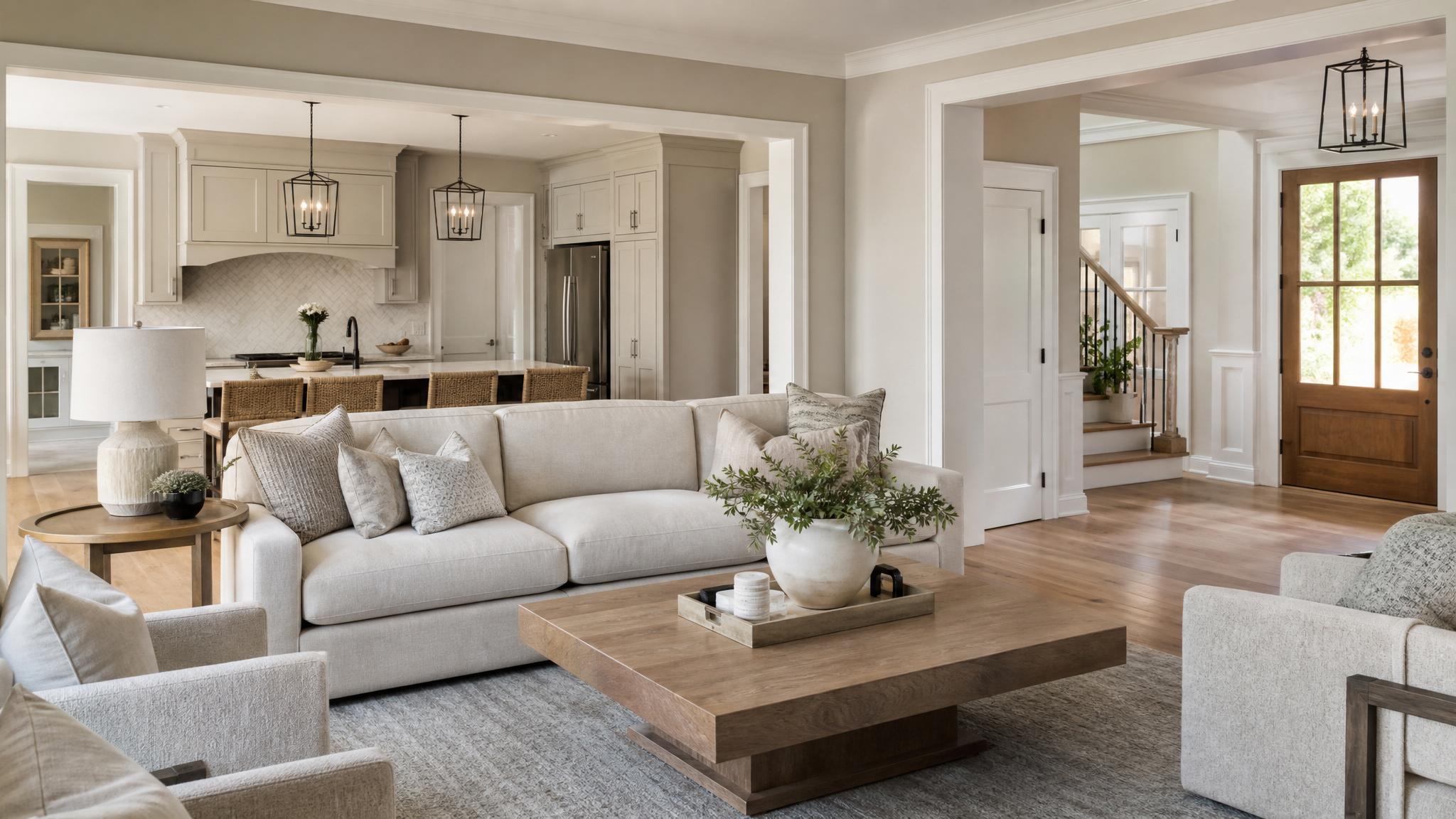
Get startedA transitional neutral palette strikes a balance between traditional and modern styles, allowing you to create a harmonious living space. This style often employs soft tones and subtle contrasts, making it ideal for an open-plan living room where different areas must blend seamlessly.
30 Combinations for Your Open-Plan Living Room
Here are 30 combinations that embody transitional aesthetics, featuring neutral tones that range from soft grays to warm beiges. Each combination ensures your living area feels cohesive and inviting.
- Gray and Beige - A soft gray with warm beige accents creates a calming backdrop.
- Ivory and Taupe - Light ivory with taupe adds a touch of warmth while keeping it airy.
- Soft White and Pale Sage - These hues work together to offer a fresh, natural vibe.
- Warm Caramel and Charcoal - This combination adds depth without overpowering the space.
- Sand and Mauve - A light sand paired with a soft mauve brings a gentle, feminine touch.
- Putty and Dusty Blue - Perfect for creating a serene and sophisticated atmosphere.
- Warm Stone and Off-White - Embodies an elegant yet grounded aesthetic.
- Creme and Light Olive - A refreshing, earthy pairing that feels organic.
- Beige and Light Steel Blue - This combination introduces a subtle but distinct contrast.
- Soft Peach and Grayed Lavender - Ideal for creating a soft, dreamy ambiance.
- Champagne and Smoky Grey - This duo offers a glamorous feel while remaining neutral.
- Warm Taupe and Cloud White - A versatile choice that can cater to various styles.
- Fawn and Light Ash - A delicate mix that enhances the natural light in your space.
- Warm Sand and Misty Blue - Evokes a coastal vibe without the cliches.
- Warm Honey and Pale Gray - Brings an inviting warmth ideal for comfy spaces.
- Buff and Dusty Pink - Adds a subtle romantic feel without going overboard.
- Wheat and Light Fern Green - Fantastic for nature lovers desiring an earthy palette.
- Chalk and Soft Coral - A cheerful combination perfect for modern homes.
- Eggshell and Moss - Deep colors meet soft shades for a dramatic effect.
- Latte and Blush - A trendy option for achieving fashionable yet comfortable decor.
- Silver and Almond - This sophisticated pairing tends to elevate any space.
- Honey Beige and Seafoam - Infuses a light and playful atmosphere.
- Driftwood and Ash - Perfect for a rustic yet polished look.
- Quartz and Light Charcoal - An understated yet eye-catching option.
- Slate Blue and Light Cream - Provides a strong contrast while keeping it inviting.
- Putty and Pale Roan - Soft and unassuming, yet elegant.
- Alabaster and Steel Blue - Clean and sophisticated with a modern edge.
- Olive and Warm Gray - Earthy vibes for a nature-inspired decor.
- Soft Plum and Buttercream - A combination that feels both cozy and luxurious.
- Sandy Beige and Olive Drab - Offers a sense of calm and relaxation.
- Warm Gray and Daffodil Yellow - Ideal for those looking for a hint of vibrancy.
- Chocolate Brown and Soft White - Classic colors that never go out of style.
- Ivory Lace and Sage Green - A lovely pairing that embodies tranquility and grace.
- Hazy Blue and Natural Tan - Perfect for creating an open and breezy space.
- Soft Silver and Cream - Timeless elegance with a clean finish.
How to Choose the Right Combination for Your Space
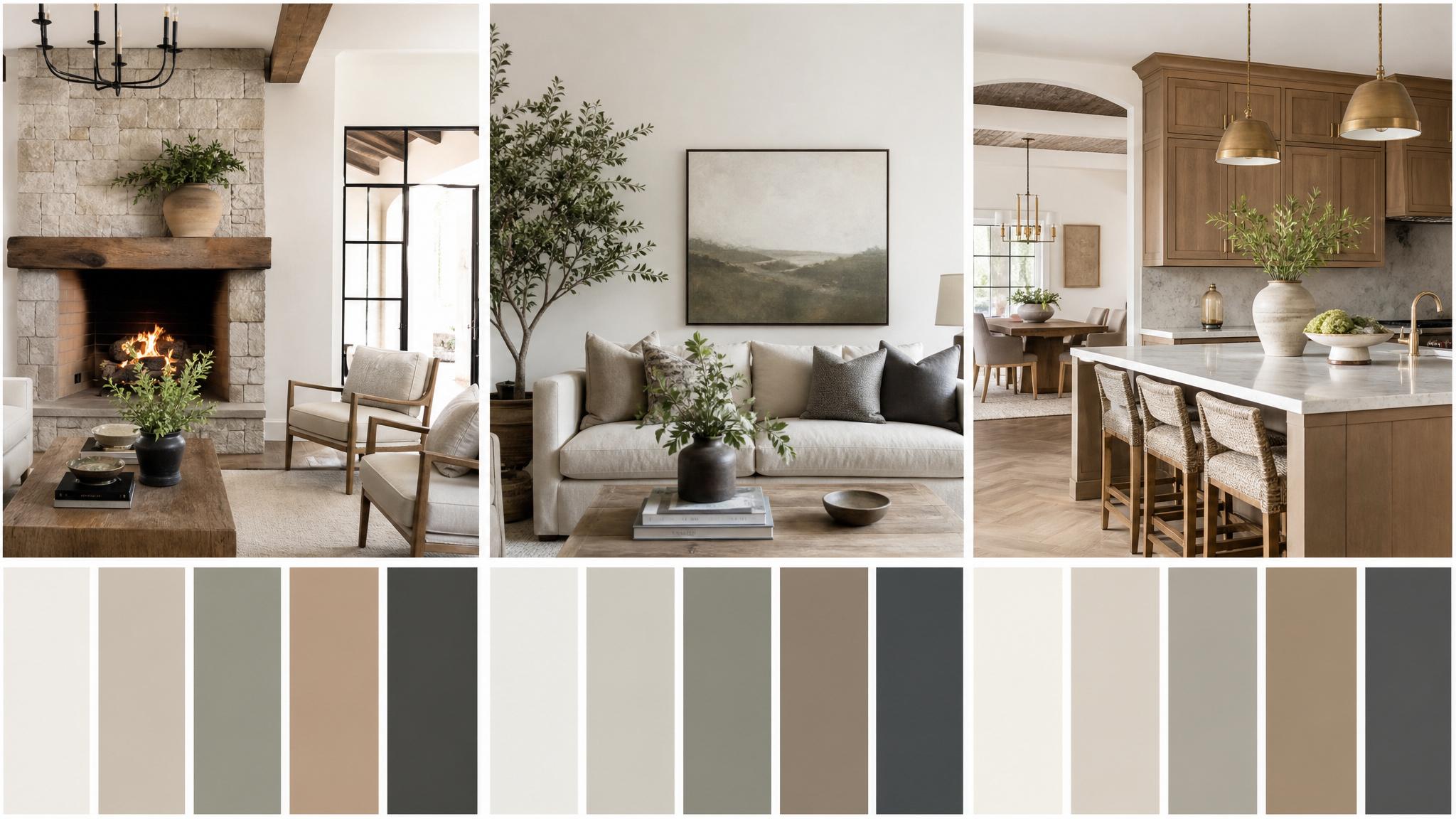
Choosing the right palette for your open-plan living room requires consideration of several factors:
- Lighting: Natural light can significantly influence how colors appear in your space. Test combinations at different times of the day.
- Existing Furniture: Allocate neutral tones that complement your existing pieces to maintain cohesion.
- Style Preference: Ensure the palette aligns with your personal style and desired atmosphere.
Key takeaway
When considering a transitional neutral palette, prioritizing balance and cohesiveness can make your open-plan living room feel inviting and sophisticated.
Final Thoughts
The beauty of a transitional neutral palette lies in its versatility. By selecting combinations wisely, you can create an open-plan living room that reflects your style while remaining serene and harmonious. Remember to experiment and enjoy the process of designing your personal haven.