Understanding Transitional Design
Try Palette Immo AI Interior Styler
Transform empty rooms and listing photos with AI virtual staging and interior design. Get started in minutes.
Get startedTransitional design is a blend of traditional and contemporary styles, creating a balanced aesthetic that feels modern yet comfortable. This approach is particularly effective in open-plan living rooms, where the need for cohesion across spaces is essential.
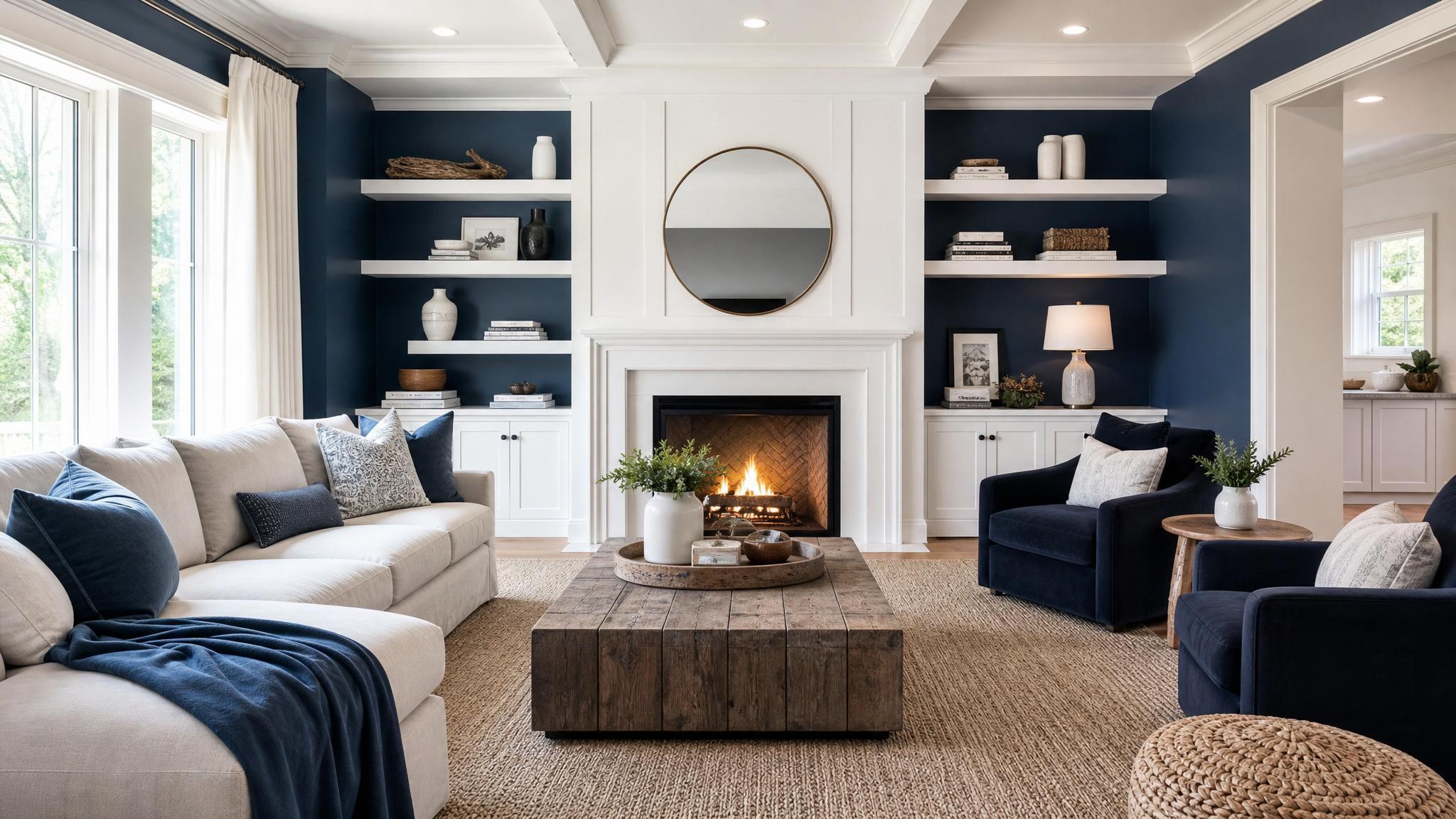
Combination 1: Soft Whites and Deep Blues
This color scheme uses soft whites as the dominant tone to create a feeling of airiness. Complemented with deep blue accents in furniture or decor, this palette introduces a touch of sophistication without overwhelming the space.
Why It Works
The pairing of soft white with blue brings an introspective yet soothing energy, perfect for a family space where relaxation is key.
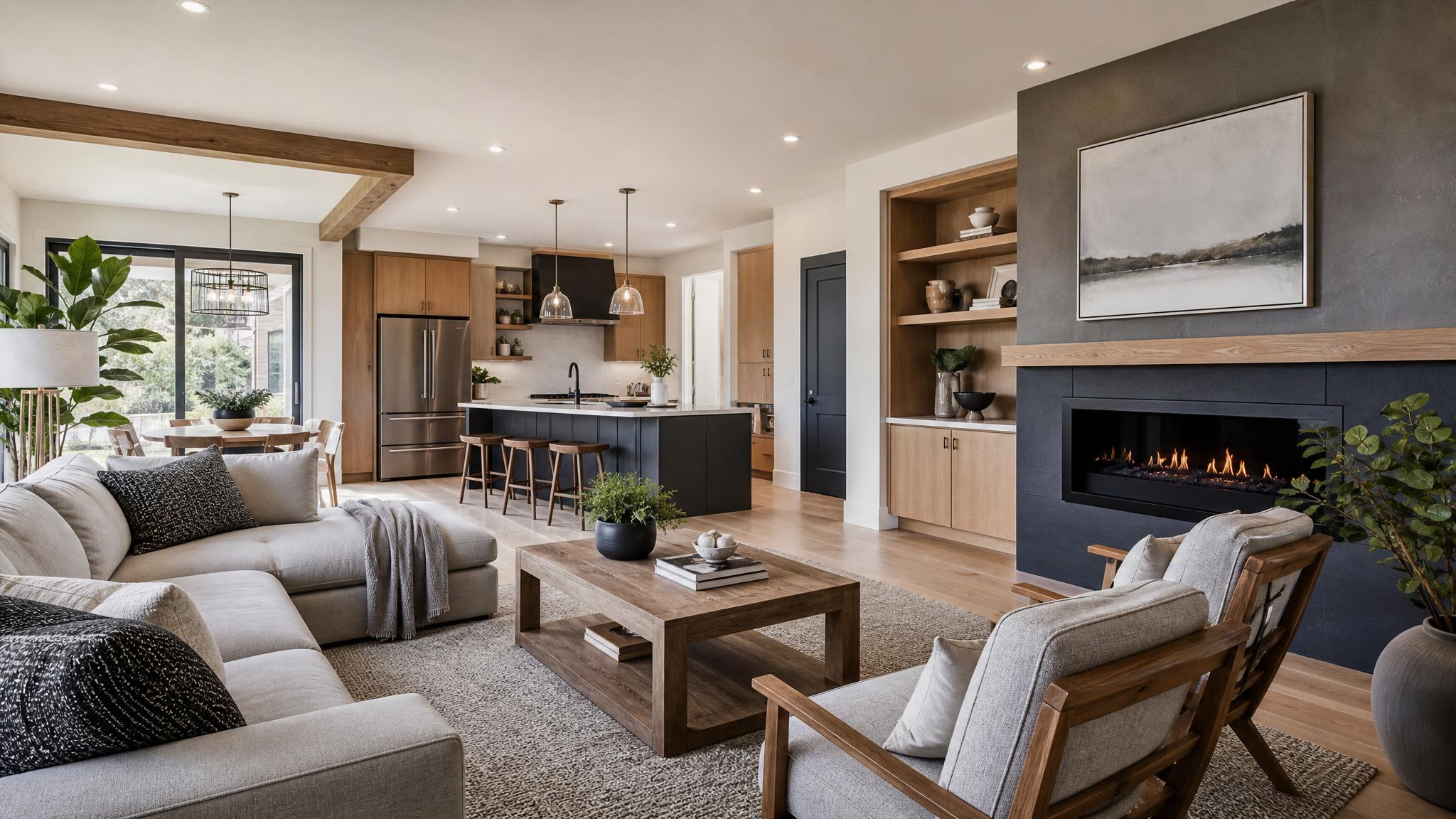
Combination 2: Cool Grays and Warm Natural Woods
This combination features various shades of gray paired with warm wood elements. The coolness of gray can be balanced out by the warmth of natural woods, providing an inviting atmosphere.
Why It Works
The juxtaposition draws the eye, creating a sense of depth while maintaining harmony in the space, which is key to the transitional style.
Combination 3: Neutral Beiges with Bold Accents
Neutral beiges can serve as a perfect backdrop, allowing homeowners to incorporate bold colors through accents like throw pillows, area rugs, or artwork.
Why It Works
This scheme offers flexibility, allowing the homeowner to frequently change the accent colors with minimal effort, which is ideal for anyone who enjoys refreshing their decor.
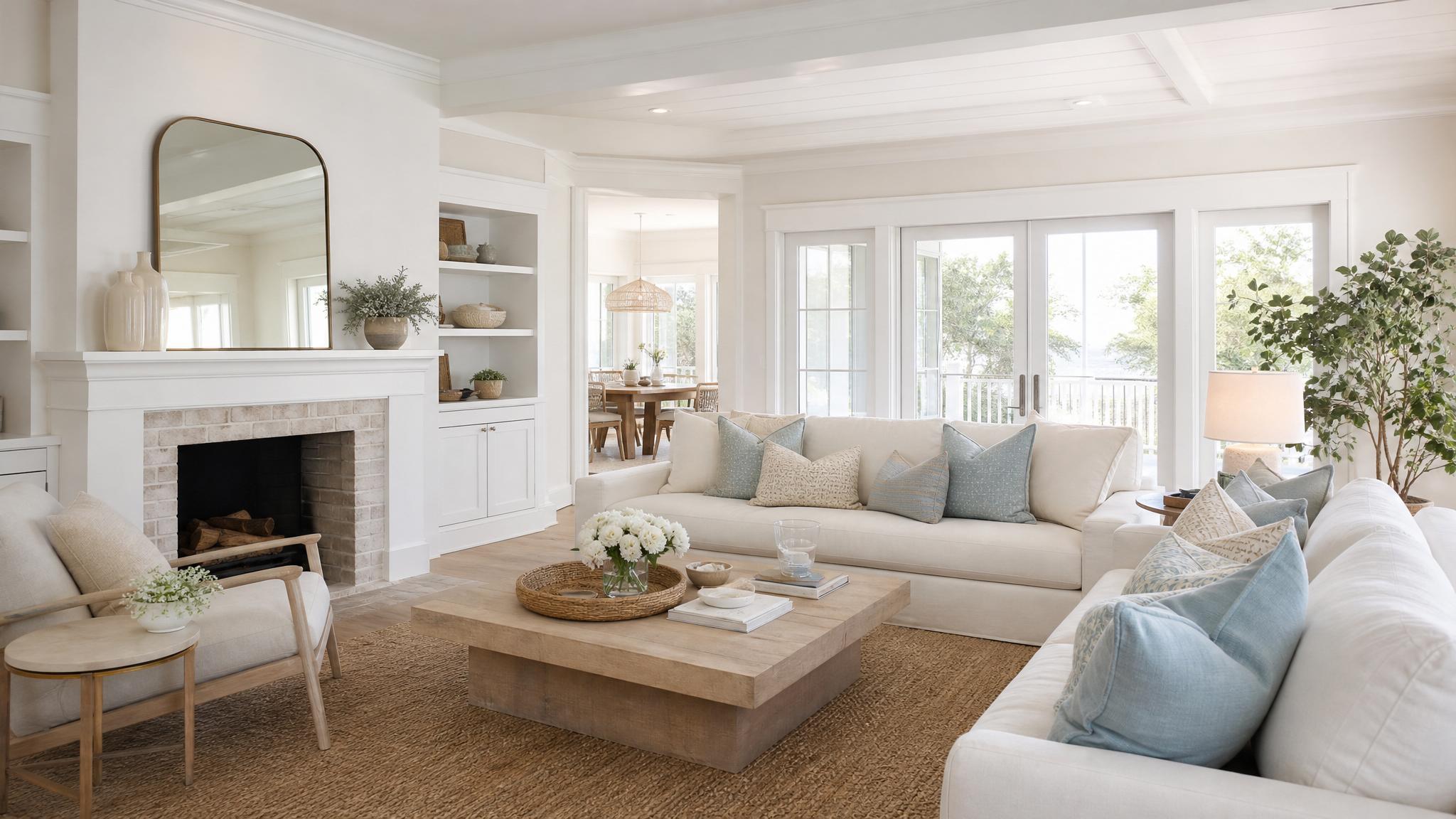
Combination 4: Soft Pastels and Crisp Whites
Create a serene environment with soft pastel shades of mint, blush, or lavender combined with crisp whites. This approach exudes tranquility, making it suitable for open spaces.
Why It Works
The softness of pastel hues brings a gentle touch, balancing the starkness of white and maintaining an airy quality, essential in open-plan designs.
Combination 5: Earthy Greens and Sandy Tones
Incorporate earthy greens like moss or olive with sandy tones to create a nature-inspired palette that feels grounded and serene.
Why It Works
This combination evokes the tranquility of outdoor spaces, connecting the interior with nature and providing a soothing backdrop for daily activities.
Key takeaway
Your choice of a transitional color scheme can significantly influence the ambience of your open-plan living room. Consider blending different tones to create a space that feels cohesive and inviting.