Understanding Rustic Open-Plan Living
Try Palette Immo AI Interior Styler
Transform empty rooms and listing photos with AI virtual staging and interior design. Get started in minutes.
Get startedRustic open-plan living combines natural elements with a spacious, airy feel, making it an ideal choice for tiny homes. By incorporating textures, earthy colors, and minimalistic designs, you can create a warm and inviting atmosphere that maximizes space efficiently.
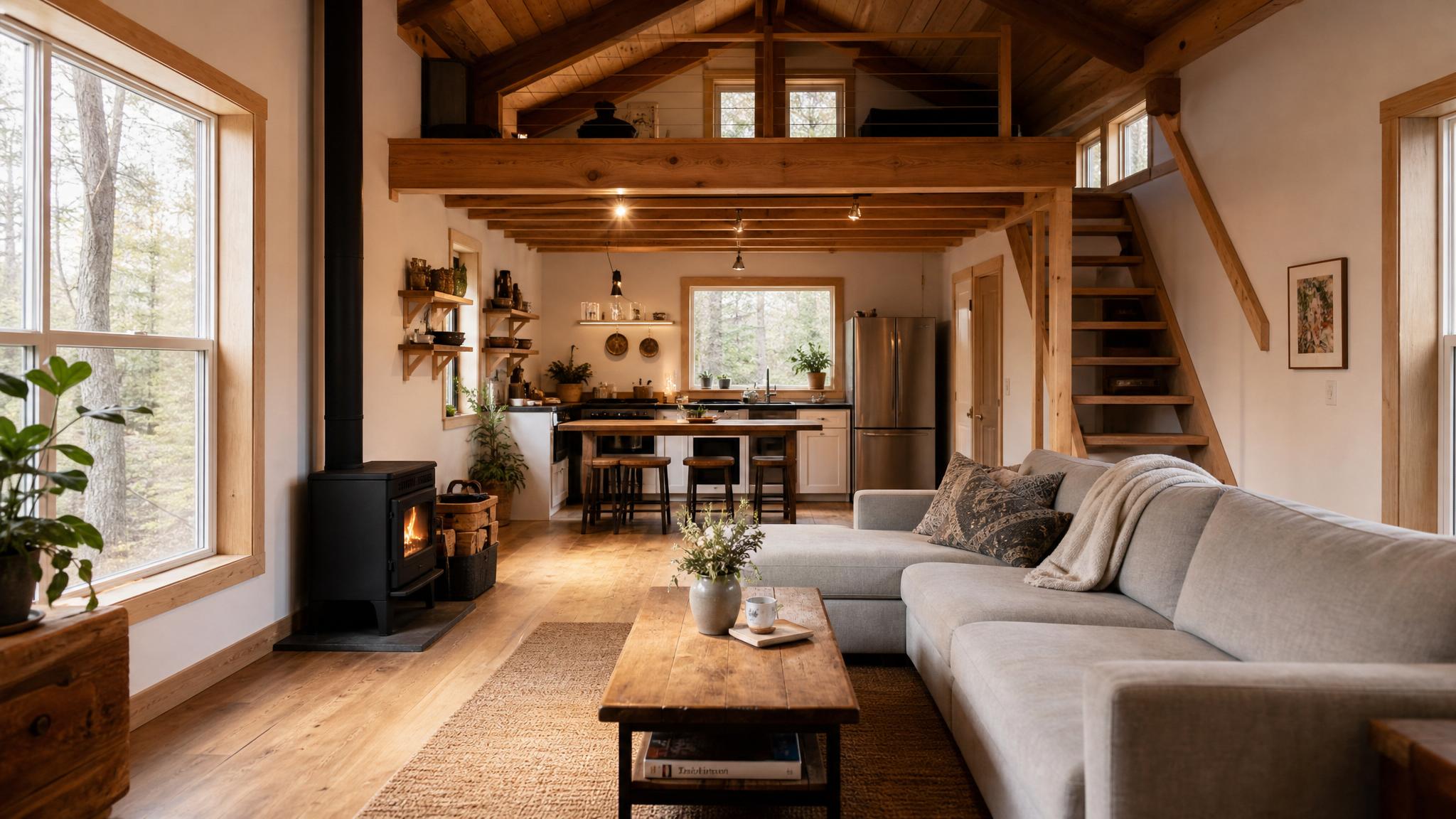
Key Elements of Rustic Design
To achieve the rustic look, focus on the following elements:
- Natural Materials: Use wood, stone, and other organic materials that provide charm and texture.
- Neutral Color Palette: Earthy tones like browns, beiges, and greens evoke a sense of calm and promote a cozy atmosphere.
- Open Space: Keep your layout open to create the illusion of more space, especially important in tiny living.
- Functional Furniture: Choose multi-functional pieces that save space while offering comfort.
Designing Your Tiny Home Living Room
When designing your tiny home living room with a rustic theme, consider these tips:
- Incorporate Built-Ins: Use built-in bookshelves or benches to optimize space without sacrificing aesthetics.
- Maximize Natural Light: Use large windows or light-colored furnishings to enhance brightness. Natural light makes spaces feel larger.
- Add Layers: Introduce a mix of textures and patterns through rugs, cushions, and throws to keep the room warm and inviting.
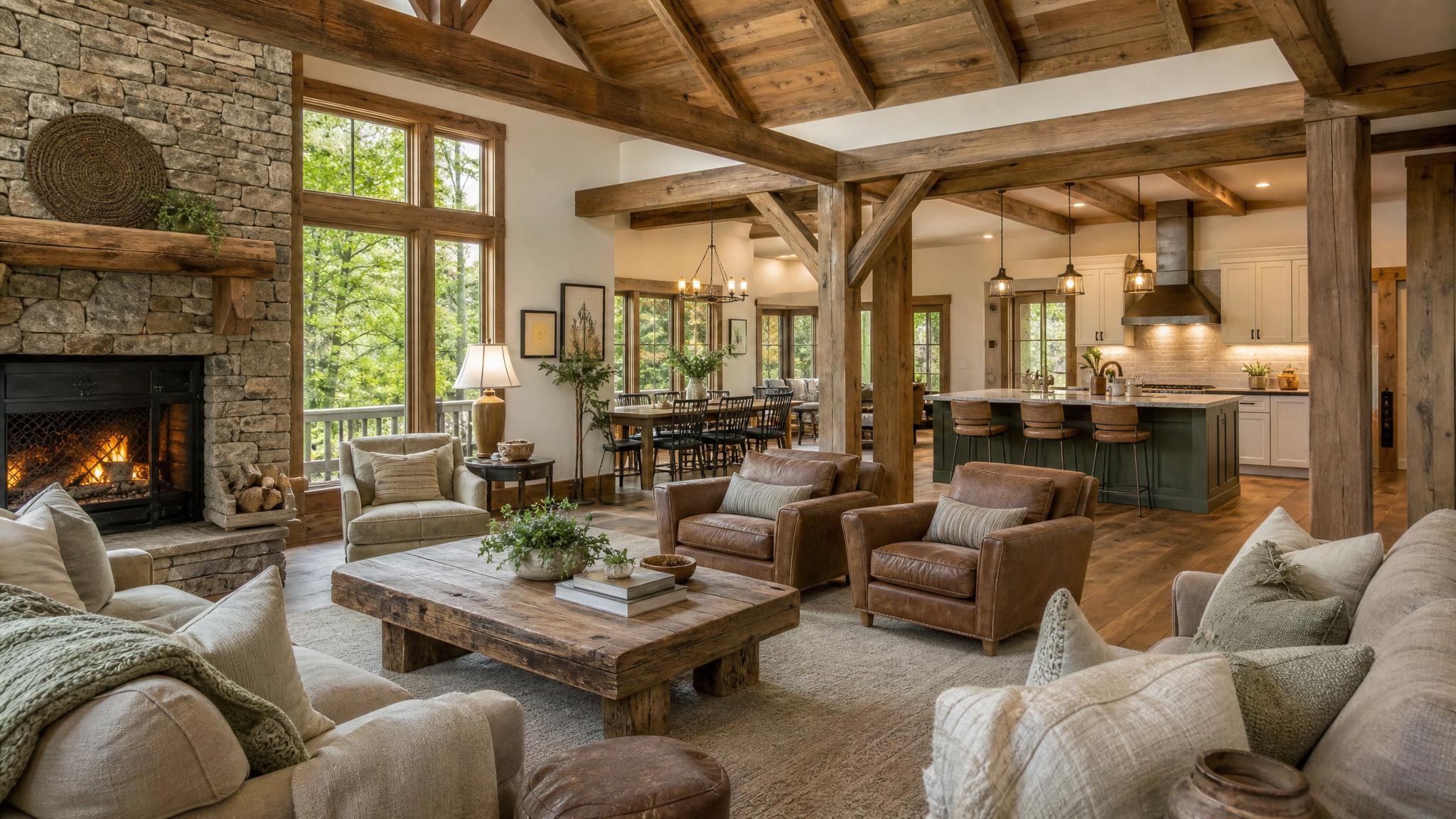
Color Schemes to Consider
Colors play a vital role in small spaces. Below are some rustic color schemes that work well in tiny home living rooms:
- Earthy Neutrals: Shades of tan, taupe, and cream create a serene backdrop that feels expansive.
- Warm Woods: Incorporate dark wood furniture to contrast lighter walls, providing depth and warmth.
- Jewel Tones: For accents, consider rich, deep colors like forest green or navy to add character without overwhelming the space.
Common Mistakes to Avoid in Tiny Rustic Living Rooms
Designing a rustic open-plan living room in a tiny home can be tricky. Avoid these pitfalls:
- Overcrowding: Resist the urge to fill your space with too many furnishings. Stick to essential pieces that promote functionality.
- Ineffective Lighting: Ensure you layer lighting effectively; use a mix of ambient, task, and accent lighting.
- Ignoring Scale: Choose appropriately sized furniture. Oversized pieces can easily overwhelm smaller spaces.
Key takeaway
Using rustic elements in tiny homes not only delivers warmth and charm but also prioritizes space efficiency, making every square foot count.
Conclusion: Embracing the Rustic Aesthetic in Tiny Homes
Creating a rustic open-plan living room in a tiny home is entirely achievable with thoughtful planning and design. Use natural materials, maintain an open layout, and choose a calming color palette to craft a space that feels both cozy and vast. Remember, the goal is to maximize utility while maintaining an inviting atmosphere!