Understanding Rustic Design
Try Palette Immo AI Interior Styler
Transform empty rooms and listing photos with AI virtual staging and interior design. Get started in minutes.
Get startedRustic design embodies a sense of warmth and simplicity that draws from natural materials and earthy color tones. This style often incorporates elements like wood, stone, and textiles that exude comfort and charm. In a living room, these features create a welcoming atmosphere, inviting relaxation and connection.
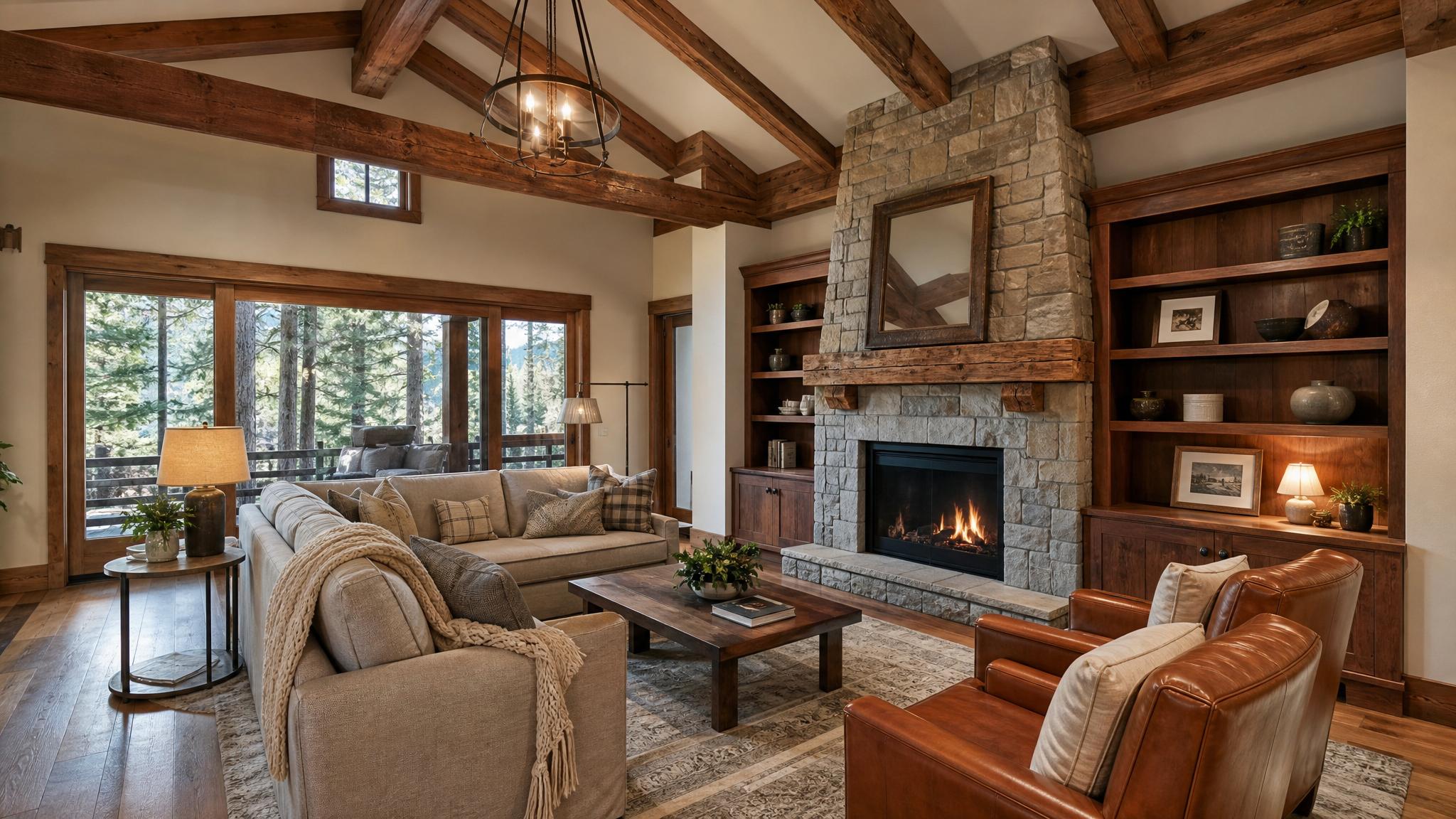
12 Rustic Color Palette Combinations
Choosing the right color palette is essential for setting the mood in your living room. Here are twelve rustic combinations to inspire your next interior design transformation:
1. Earthy Greens and Browns
Combine olive green walls with walnut brown furniture for a grounded space.
2. Soft Beige and White
Use soft beige with crisp white accents to create an airy feel while maintaining warmth.
3. Terracotta and Slate Gray
Mix terracotta pottery with slate gray upholstery for a balance of warmth and coolness.
4. Dusty Blue and Natural Wood
Pale dusty blue paired with natural wood tones offers a serene, calming effect.
5. Mustard Yellow and Charcoal
Mustard yellow throws against a charcoal backdrop brighten up the room.
6. Warm Taupe and Cream
Keep it cozy with warm taupe walls and cream furnishings to reflect light.
7. Forest Green and Tan
This combo is perfect for a nature-inspired vibe, enhancing earth tones.
8. Rustic Red and Olive
Rustic red accents on olive-green walls add vibrant yet earthy charm.
9. Ivory and Sage
Pair ivory shades with soft sage for a refreshing, understated palette.
10. Dark Blue and Weathered Gray
Deep blue tones against weathered gray offer a dramatic, cozy space.
11. Cinnamon and Cream
Cinnamon accents with cream walls create warmth and softness.
12. Luxe Black and Warm Maple
Contrasting luxe black with warm maple provides elegance within rustic charm.
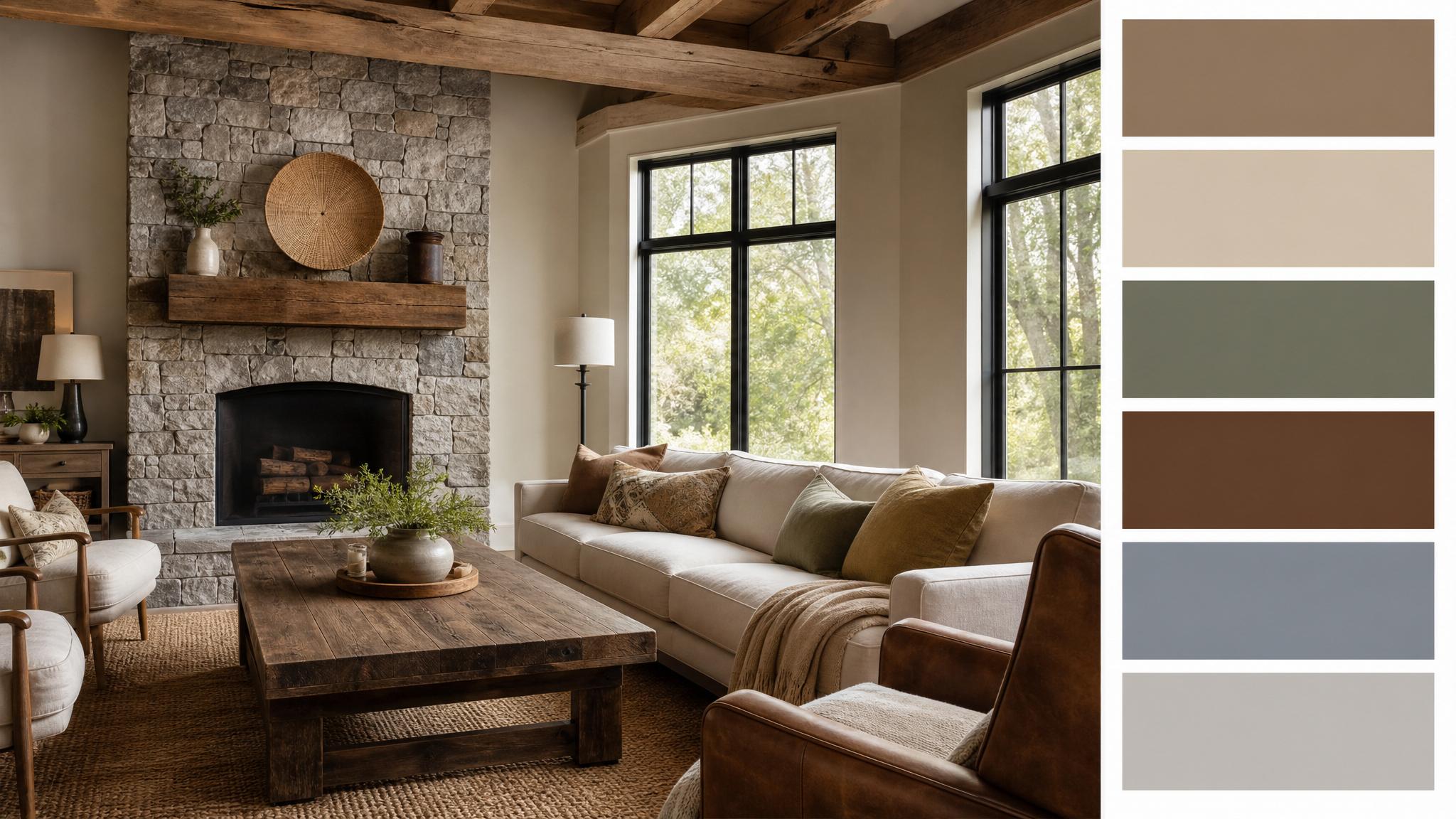
Incorporating Textures
Integrating various textures into your chosen color palette can enhance the rustic aesthetic. Consider combining woven textiles, soft leathers, and rough-hewn woods to create depth and interest. This texture interplay brings the room to life, making the colors resonate more deeply against the tactile surfaces.
Key takeaway
Selecting a rustic color palette isn't just about colors; it's about creating a feeling of warmth and coziness that invites people in.
Final Thoughts on Rustic Living Room Palettes
Whether you blend classic colors or dive into more unique combinations, the key to a successful rustic living room is harmony. Aim for a palette that feels cohesive, paying attention to balance in colors, textures, and natural elements to achieve that inviting rustic vibe.