Why Open-Plan Living Rooms?
Try Palette Immo AI Interior Styler
Transform empty rooms and listing photos with AI virtual staging and interior design. Get started in minutes.
Get startedOpen-plan living rooms have become a popular choice for many homeowners and potential buyers. They create spaces that feel larger and allow for better flow and functionality. However, capturing the essence of an open-plan area in photographs can be tricky. Here are 25 tips to help you improve your open-plan living room shots.
1. Declutter the Space
The first step to capturing a striking photo is to declutter. Remove unnecessary items that can distract from the overall aesthetic of the room. Less is more when it comes to open-plan designs.
2. Use Natural Light
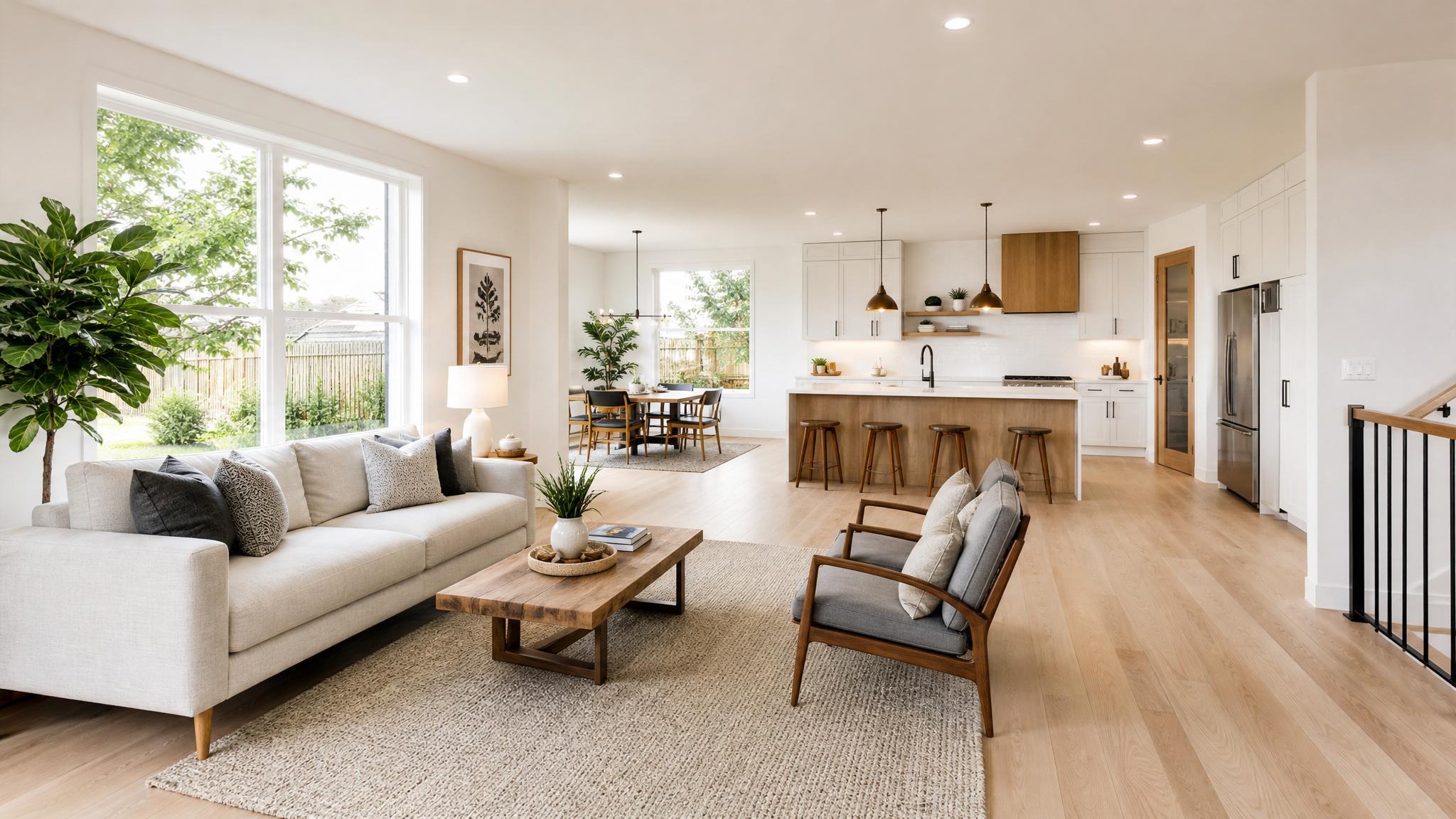
Natural light is your best friend when photographing an open-plan living room. Schedule your photoshoot during the day when light penetrates the space beautifully. Open the curtains and let sunlight brighten up the area.
3. Focus on Angles
Experiment with different angles to showcase the room's layout. Wide-angle shots can help portray the expansiveness of an open-plan space. Shoot from the corners of the room to capture multiple areas in one frame.
4. Highlight Connectivity
Open-plan living spaces are known for their connectivity. Highlight how the living room flows into the dining space or kitchen. Capture images that show this harmony to add interest to your photographs.
5. Choose the Right Time of Day
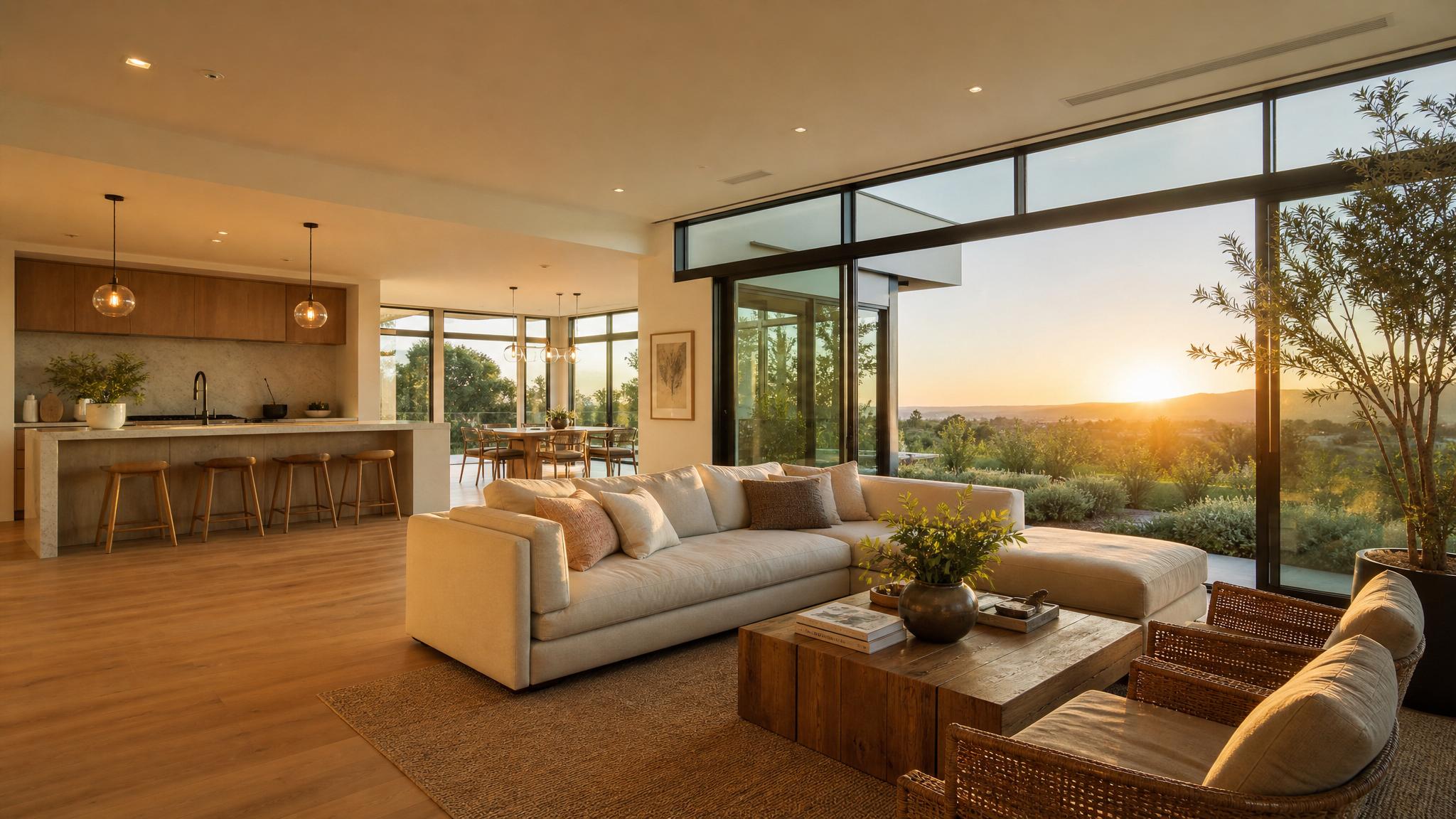
The angle of sunlight changes throughout the day, impacting how your photos look. The golden hour, right before sunset, provides a warm and inviting glow.
6. Use Props Wisely
Enhance your photos by using tasteful props. A stylish vase, fresh flowers, or an attractive throw can bring a living room to life without overwhelming the space.
7. Stage Carefully
Staging can make a significant difference in how your space is perceived. Create a cozy atmosphere with well-placed furniture and decor.
8. Pay Attention to Textures
In open-plan spaces, textures hold immense importance. Incorporate a variety of textures in both furniture and decor—soft cushions, woven rugs, or wooden tables give depth to your photos.
9. Edit for Consistency
Post-editing should be done carefully. Be consistent with filters, brightness, and saturation to maintain a professional look across your photos.
10. Consider Furniture Placement
Be mindful of how furniture is arranged. Having enough walking space enhances comfort and conveys a more inviting environment.
11. Capture Details
Don't forget to take close-up shots of interesting features such as stylish light fixtures, custom cabinetry, or unique wall textures.
12. Use a Tripod
To avoid blurriness and promote stability, use a tripod when shooting. This allows you to concentrate on framing and composition.
13. Interact with the Space
Including elements of life can help potential buyers envision themselves living in the space. Capture candid moments such as someone relaxing on the couch or enjoying a meal at the dining table.
14. Incorporate Digital Tools
Utilize tools like Palette.immo for virtual staging, allowing you to present a well-decorated space digitally. This is particularly useful for vacant homes.
15. Experiment with Filters
Filters can drastically change the mood of your photos. Experiment with different styles to discover what enhances the ambience of the living room.
16. Avoid Overexposure
Pay attention to lighting so that you do not overexpose your images. Overexposed photos can result in loss of detail.
17. Balance the Elements
Ensure that both decorative elements and negative space are balanced in your shots. Too much clutter can detract from the beauty of your design.
18. Capture the Flow
Photograph how people move through the home. Do this by capturing visuals that show pathways and transitions between spaces.
19. Highlight Focal Points
Determine what the focal point of the room is (like an entertainment center or a fireplace) and ensure it attracts attention in your photographs.
20. Include Outdoor Spaces
If your open-plan living area leads to an outdoor space, include it in your shots. It provides additional context and appeal to potential buyers.
21. Use Shadows Wisely
Shadows can create depth and mood in your photos. Experiment with how light casts shadows to enhance the scene.
22. Capture Different Seasons
Showcase the versatility of your space by capturing it in different seasons. Seasonal decor can enhance the mood of your photos and attract varying buyer types.
23. Invest in Good Equipment
While smartphones are great, investing in a good camera will greatly improve your photo quality, especially for fine details.
24. Use Post-Processing Software
Editing software can help you fine-tune your images. Adjust colors, brightness, and contrast to make your open-plan living room photos pop.
25. Keep Practicing
The more you practice photography, the better you will become. Regularly shoot your spaces to refine your skills and discover new techniques.
Key takeaway
When photographing open-plan living rooms, it’s crucial to create an inviting atmosphere that captures potential buyers’ attention. Utilizing natural light, paying attention to angles, and incorporating staging techniques can dramatically enhance your images.