Understanding Transitional Design in Open-Plan Spaces
Try Palette Immo AI Interior Styler
Transform empty rooms and listing photos with AI virtual staging and interior design. Get started in minutes.
Get startedTransitional design blends traditional and contemporary elements to create a harmonious interior. In an open-plan living room, this style helps provide a cohesive flow, making small spaces feel larger and more inviting. It strikes a balance between comfort and sophistication, which is essential for appealing to short-term rental guests.
Essential Elements of a Transitional Furniture Layout
When designing a furniture layout for transitional spaces, keep these key elements in mind:
- Color Palette: Neutral and muted colors form the basis of transitional design, with occasional pops of color for interest.
- Furniture Choices: Select both traditional and contemporary pieces that complement each other without clashing.
- Functional Layout: Optimize the space with a layout that encourages movement and fluidity between different areas.
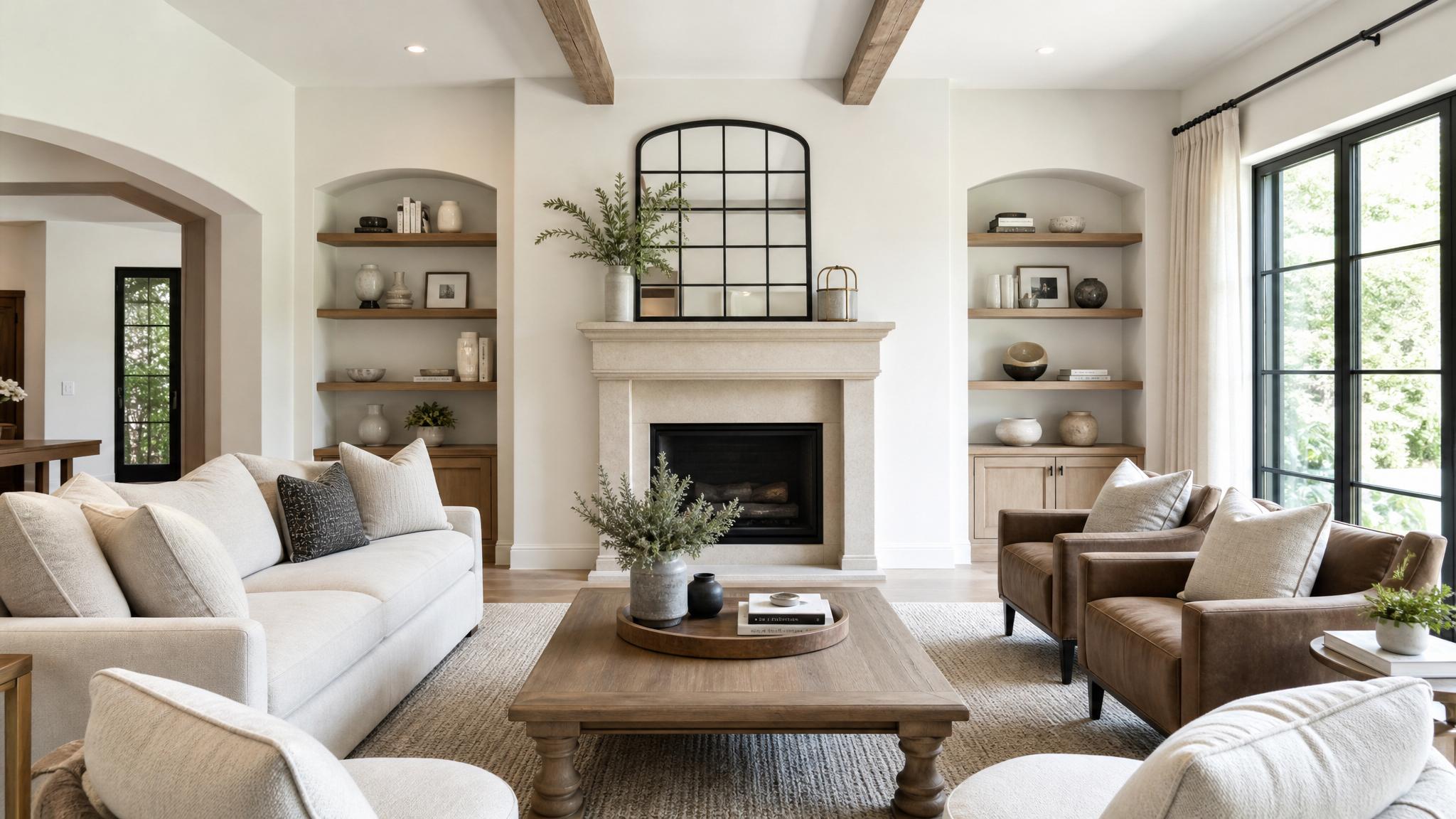
Best Transitional Furniture Layout Ideas for Open-Plan Living Rooms
Here are three effective layouts to consider:
1. The Zoning Layout
This layout uses furniture to define different zones within the open space without using walls. Use area rugs and furniture placement to create sections for relaxation, dining, and even work:
- A sofa oriented to face a TV or fireplace to create a cozy lounge.
- A dining table placed nearby to maintain proximity yet emphasize separation.
- Accent chairs around coffee tables to enhance conversation areas.
2. The Conversational Layout
For properties that anticipate gathering, arrange your seating to encourage conversation:
- Arrange sofas and chairs in an L-shape or U-shape to allow guests to engage effortlessly.
- Include a central coffee table to unify the seating arrangement.
- Use small side tables for drinks and personal items without cluttering the space.
3. The Multi-Functional Layout
Especially ideal for short-term rentals, this layout incorporates furniture with dual purposes:
- Invest in a sofa bed or a daybed for additional sleeping space.
- Choose a coffee table that lifts to become a dining or work surface.
- Incorporate storage ottomans for easy extra seating and hidden storage.
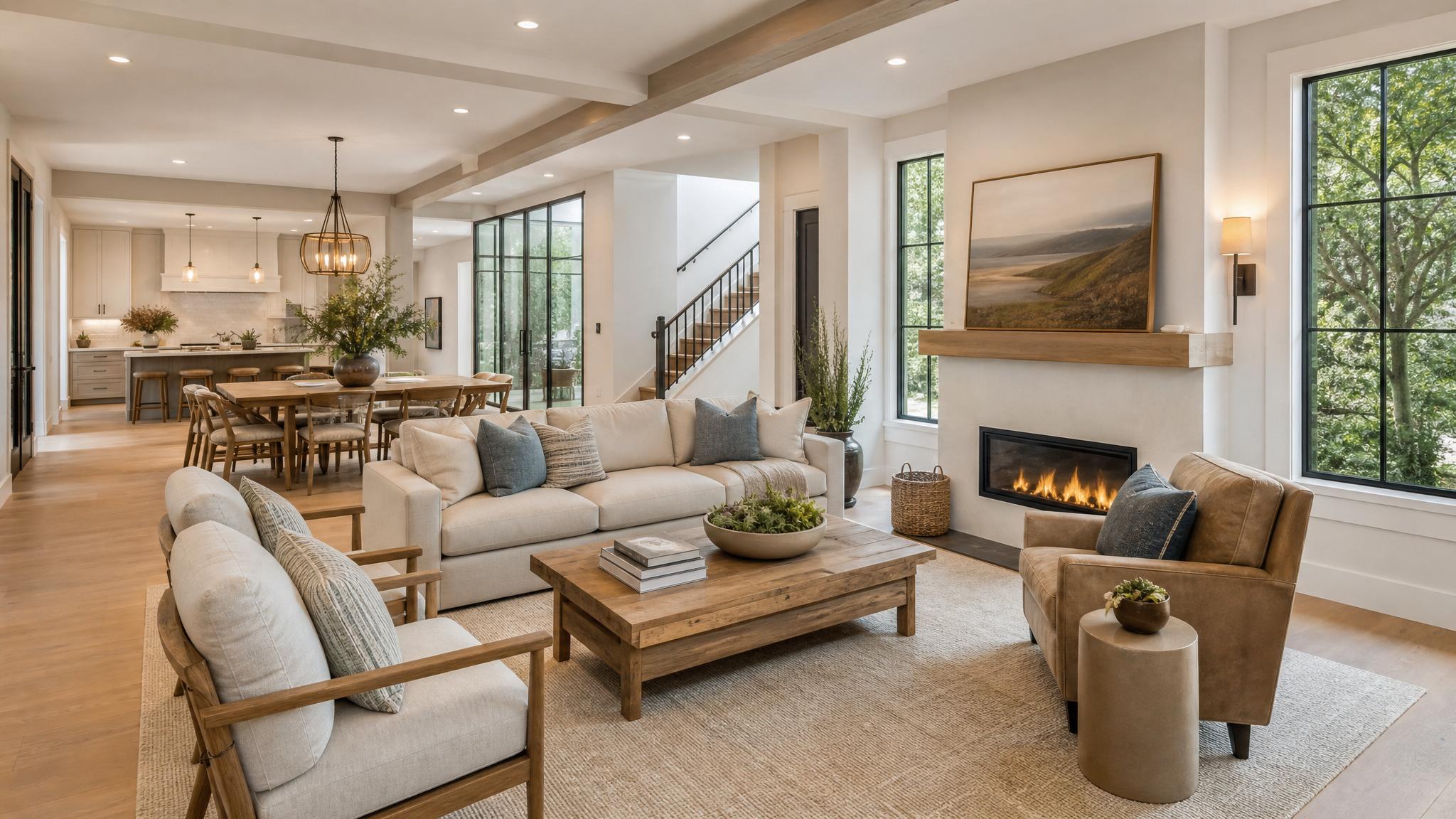
Designing for Comfort and Style
Comfort is paramount in short-term rentals. In transitional layouts, mix textures with soft textiles and durable materials for a cozy but stylish feel:
- Layer rugs to create depth and warmth.
- Incorporate throw blankets and cushions for added comfort.
- Add unique design elements like wall art and decor that reflect the local culture, enhancing guest experience.
Key takeaway
In transitional furniture layouts for open-plan living rooms, prioritize comfort and functionality while ensuring the design is inviting and cohesive to enhance guest experience.
Conclusion
Creating a successful transitional furniture layout in an open-plan living room can make a significant difference in attracting short-term rental guests. By thoughtfully combining design elements, choosing multifunctional furnishings, and optimizing comfort, you can create a versatile and welcoming environment that guests will love.