Understanding Biophilic Design
Try Palette Immo AI Interior Styler
Transform empty rooms and listing photos with AI virtual staging and interior design. Get started in minutes.
Get startedBiophilic design emphasizes our innate connection to nature by incorporating natural elements into indoor spaces. This approach enhances both aesthetic appeal and well-being, especially in smaller living rooms. Whether it's through natural light, greenery, or materials, biophilic design can create a sense of tranquility and openness.
Layout Ideas for Small Biophilic Living Rooms
When working with limited space, choosing the right layout can significantly impact functionality and aesthetics. Here are 30 ideas to inspire your design:
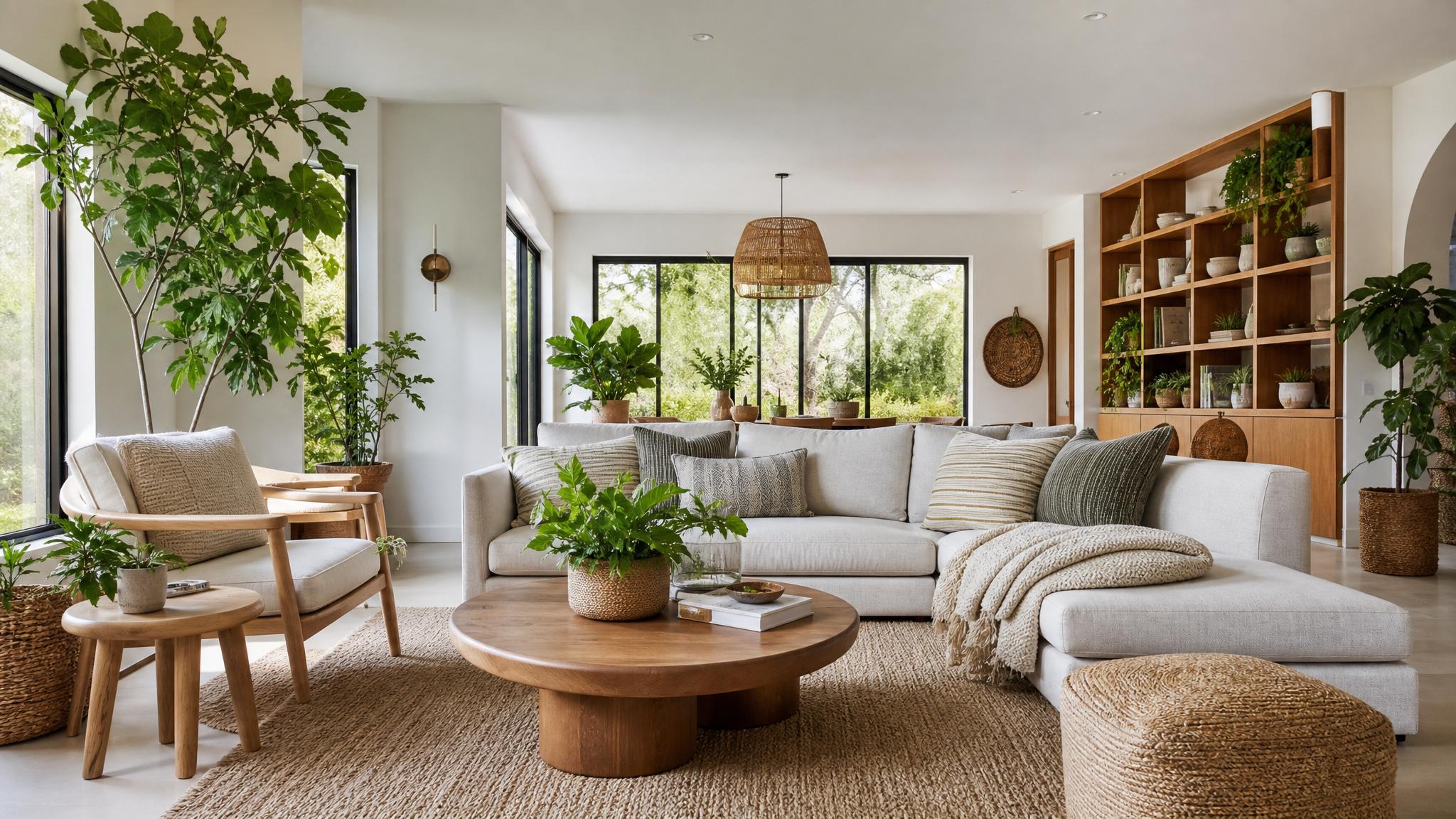
- 1. L-Shaped Sofa: Use an L-shaped sofa to create a cozy nook that encourages social interaction.
- 2. Floating Furniture: Consider floating furniture arrangements to maximize free space in the center.
- 3. Multi-Functional Furniture: Opt for ottomans and coffee tables with storage to keep the area tidy.
- 4. Vertical Plants: Incorporate wall-mounted planters to save floor space while adding greenery.
- 5. Low Furniture: Choose lower-profile furniture to make the space feel larger and airier.
- 6. Corner Bench: A corner bench is a great way to provide seating without overwhelming the room.
- 7. Galley Style: Arrange furniture parallel to each other to create a narrow, streamlined look.
- 8. Minimalist Layout: Keep it simple with a single focal point, such as a coffee table or a feature plant.
- 9. Zenith Heights: Use tall bookshelves instead of wide cabinets to draw the eye upward.
- 10. Zone Division: Use area rugs to define different zones within the living room.
- 11. Circular Arrangements: A circular sofa arrangement encourages conversation and interaction.
- 12. Biophilic Accent Walls: Paint one wall a nature-inspired color or use natural materials for texture.
- 13. Daybed Configuration: A daybed can serve as both seating and lounging space.
- 14. Recliners: Add a slim recliner for comfort without taking up too much room.
- 15. Sunken Seating: Consider a sunken seating area for a unique and cozy vibe.
Additional Layout Ideas
- 16. Outdoor Connections: Use large glass doors to connect your living space to an outdoor area.
- 17. Platform Style: Create a raised platform for additional seating or a play area.
- 18. Low Seating: Low-slung seating options can open up floor space visually.
- 19. Wall-Mounted Furniture: Incorporate a wall-mounted desk or table to save floor space.
- 20. Curved Sofas: Curved sofas can soften harsh edges and make the space feel inviting.
- 21. Light Reflectors: Use mirrors strategically to reflect light and give the illusion of a larger space.
- 22. Natural Shades: Use woven shades on windows to let natural light in while maintaining privacy.
- 23. Bifold Doors: Consider bifold doors that can be opened to combine indoor and outdoor living areas.
- 24. Low-Level Lighting: Incorporate layered lighting with lamps and sconces for a cozy atmosphere.
- 25. Integrated Lighting: Use recessed lighting for an unobtrusive design element.
- 26. Textured Fabrics: Add comfort with textured cushions and throws that also tie in natural elements.
- 27. Biophilic Color Palette: Choose colors inspired by nature for paint and décor to enhance the overall design.
- 28. Indoor Water Feature: If space allows, consider adding a small water fountain for soothing sounds.
- 29. Art Display: Hang art that features nature scenes or botanical themes.
- 30. Modular Seating: Use modular seating that can be rearranged to fit your needs.
The Benefits of Biophilic Design in Small Spaces
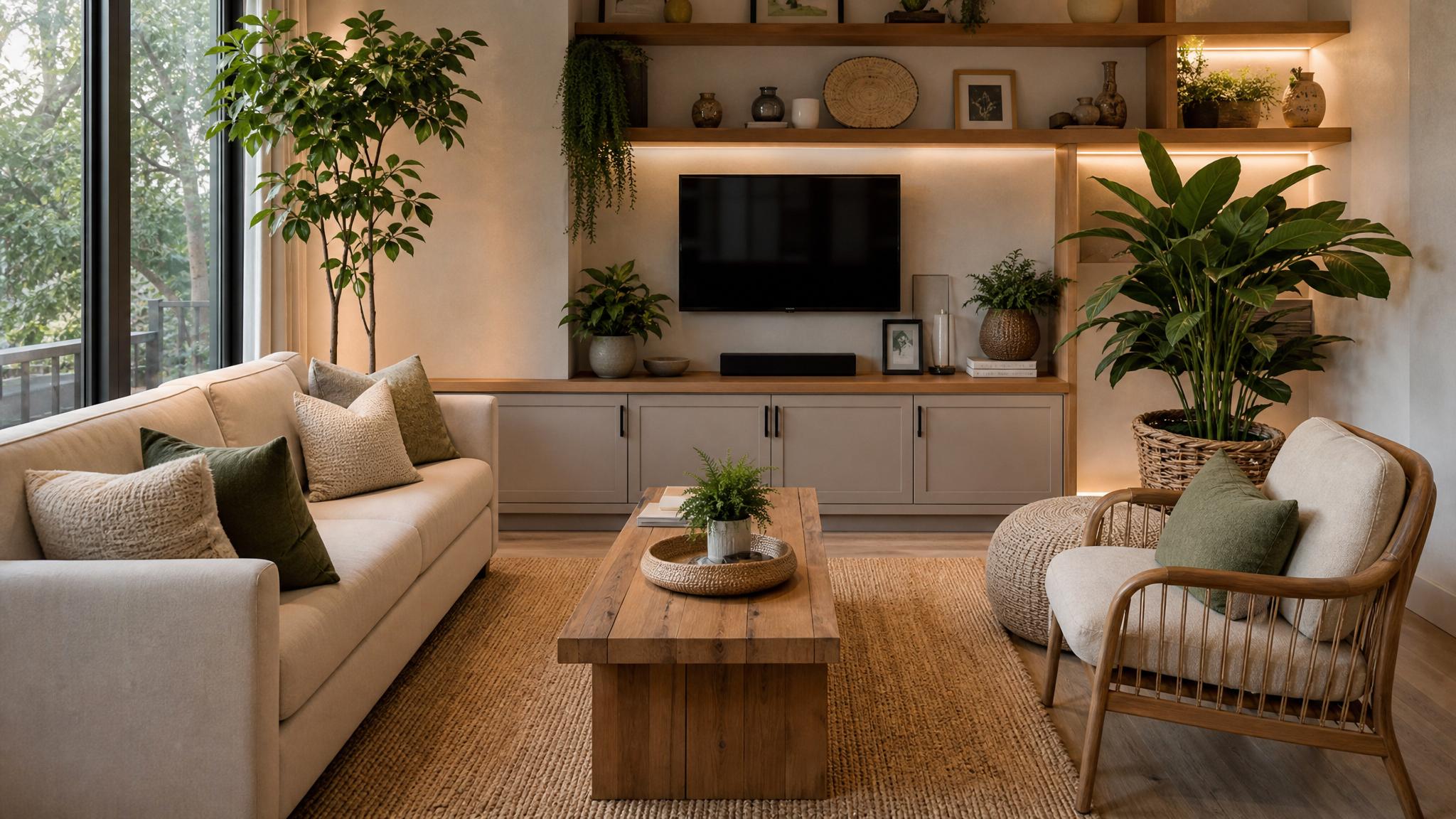
Biophilic design isn’t just about aesthetics. It positively impacts mental health, productivity, and overall well-being. In small living rooms, incorporating biophilic elements can create an inviting and stress-reducing environment that transcends the limitations of space.
Key takeaway
Incorporating biophilic design principles in small living rooms not only beautifies the space but also fosters a calming atmosphere that resonates with nature.
Quick Tips for Implementing Biophilic Layouts
Here are some quick tips to enhance your small living room with biophilic design:
- Prioritize natural light; avoid heavy drapes that block sunlight.
- Incorporate plants to purify the air and add vibrancy.
- Choose materials that reflect nature, like wood and stone.
- Maximize vertical space with tall shelving and hanging greenery.
- Use color palettes inspired by the natural world.