The Appeal of Transitional Open-Plan Living Rooms
Try Palette Immo AI Interior Styler
Transform empty rooms and listing photos with AI virtual staging and interior design. Get started in minutes.
Get startedTransitional open-plan living rooms are designed to create a seamless flow between different functional areas while maintaining a stylish and comfortable ambiance. This layout is particularly appealing to buyers because it offers flexibility and adaptability for various lifestyles. From hosting family gatherings to enjoying cozy movie nights, a well-thought-out furniture arrangement can make all the difference.
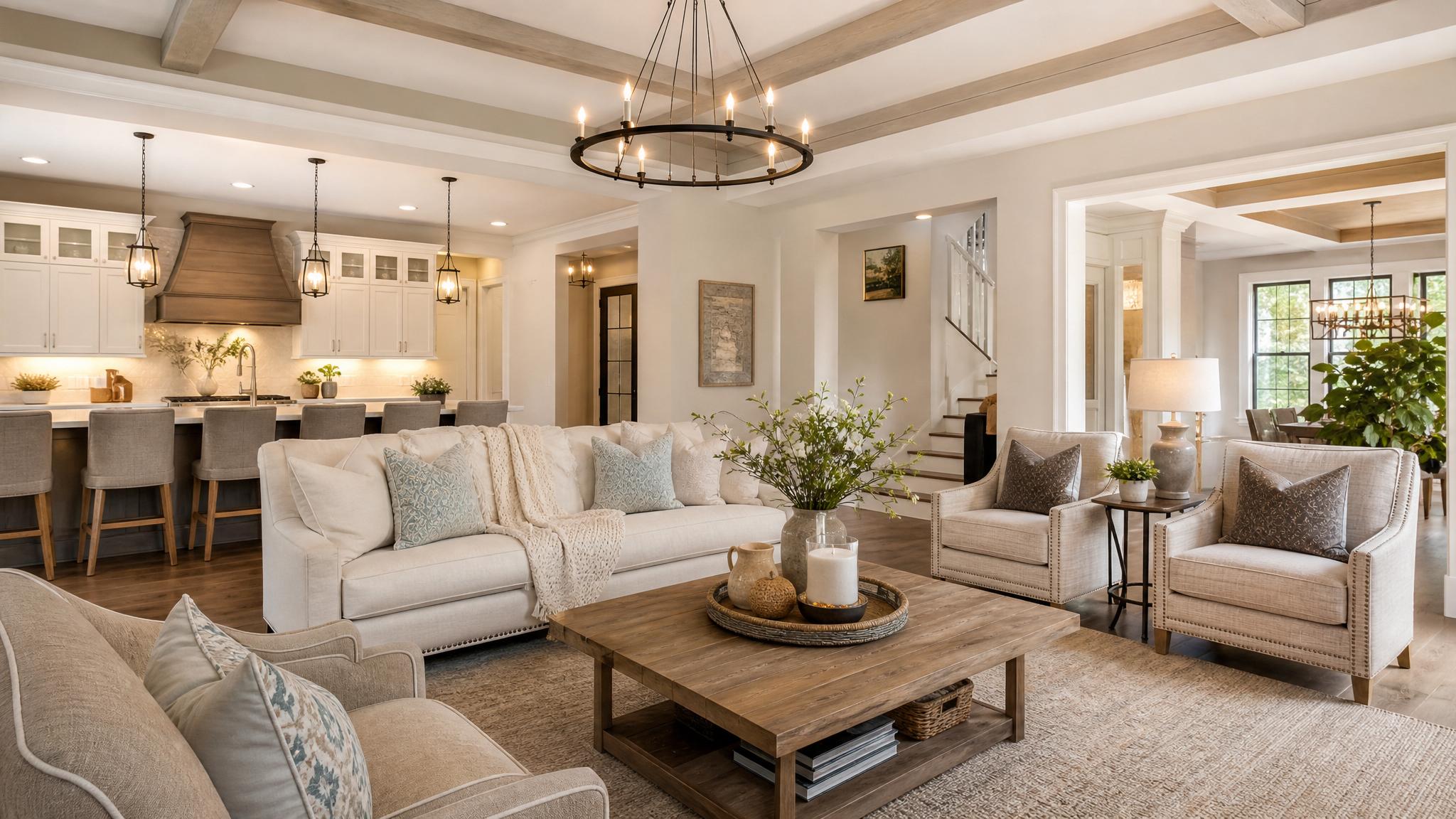
1. The L-Shaped Layout
One of the most popular furniture layouts is the L-shaped configuration, where sofas and chairs are arranged in an L formation. This layout allows for intimate conversations while also providing ample space for movement, making it ideal for an open-plan area. Place a coffee table at the center to create a gathering point.
2. The Circular Layout
The circular layout promotes a sense of togetherness. Arrange your seating in a circular format, perhaps using ottomans and chairs around a round coffee table. This configuration encourages interaction, making it perfect for entertaining guests in an open space.
3. The Zone-Based Layout
Segmenting your open-plan area into distinct zones can create a more organized look. Use area rugs or furniture placement to define spaces for different activities, such as lounging, dining, and working. This layout enhances functionality while still offering an inviting atmosphere.
4. The Sofa-Table-Chair Trio
This classic layout involves a sofa across from a coffee table, flanked by chairs. It’s straightforward yet effective, perfect for casual environments. Ensure there’s enough space to walk around, especially in high-traffic areas of the room.
5. The Media-Centric Layout
If your open-plan space incorporates a media area, consider a layout that emphasizes this feature. Position seating in a way that faces the television or fireplace, creating a cozy entertainment nook while still integrating with the overall space.
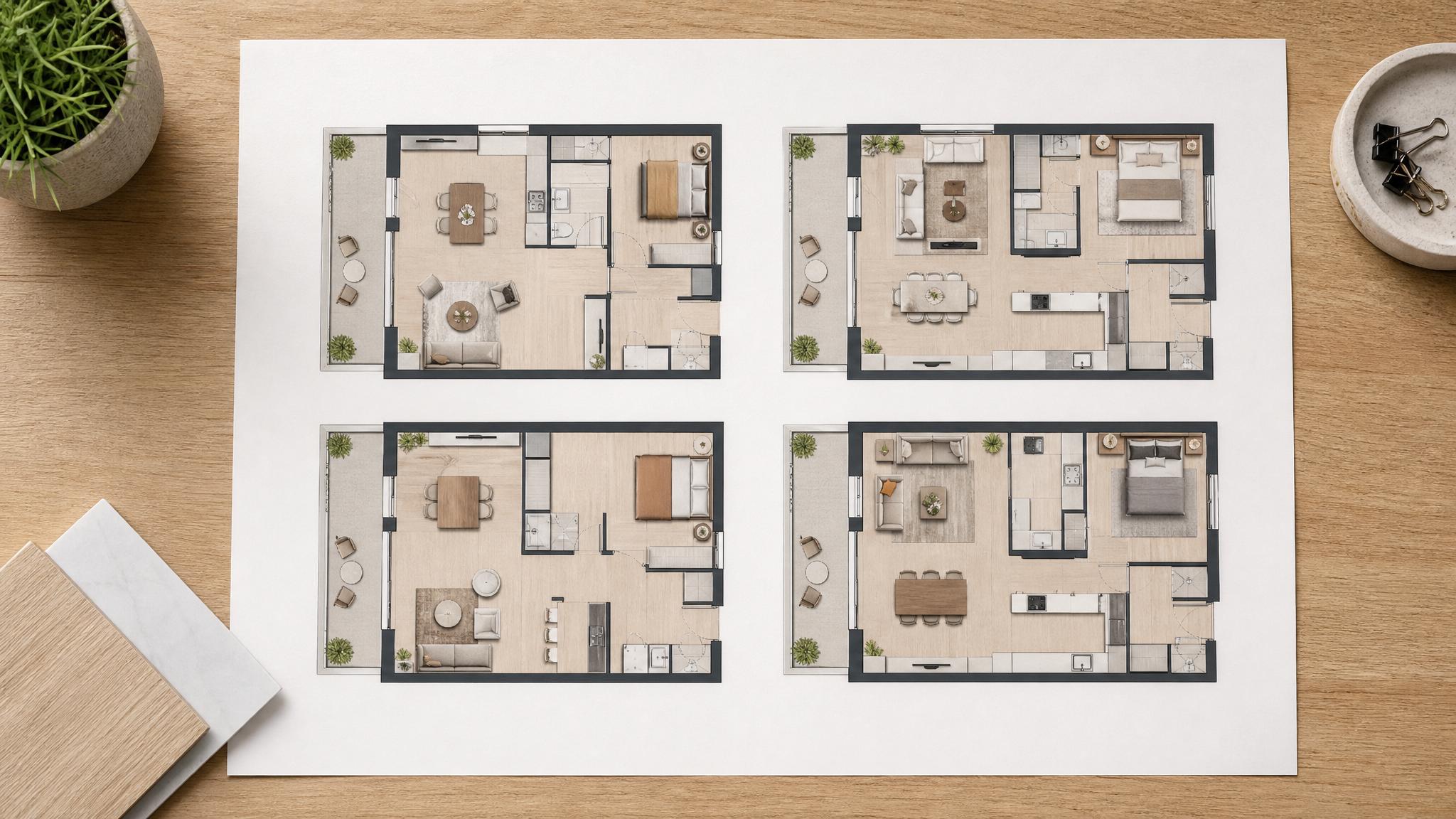
6. The Multi-Functional Layout
In today’s fast-paced world, multifunctional furniture is a game-changer. Use sofa beds, nesting tables, and ottomans with storage to create a layout that adapts to your needs. This is especially beneficial in small open-plan spaces.
7. The Gathering Layout
For social butterflies, a gathering layout may be the best choice. Opt for movable chairs and a larger coffee table, facilitating easy reconfiguration for larger group interactions. Leave pathways clear to encourage mingling and movement.
8. The Reflective Layout
Mirrors can be used to create depth in an open-plan living room. Position seating to face mirrors; this will reflect light and give the illusion of a larger space. Be mindful of where you place the mirrors to maximize the effect.
9. The Minimalist Layout
A minimalist layout focuses on fewer pieces of furniture, maximizing space and light. Choose furniture with sleek profiles and neutral colors. This layout appeals to buyers looking for a clean, uncluttered aesthetic.
10. The Cozy Nook Layout
Create a cozy reading corner or small nook using plush chairs or a loveseat. Nestle it in a less-trafficked area of the living room, perhaps near a window. Such intimate zones can enhance the overall comfort of an open-plan space.
Key takeaway
Choosing the right furniture layout for your transitional open-plan living room is essential not only for functionality but also for creating a warm and inviting atmosphere. Tailor the arrangement to reflect your lifestyle and personal taste, making your space feel truly like home.