Understanding Wabi-Sabi in Interior Design
Try Palette Immo AI Interior Styler
Transform empty rooms and listing photos with AI virtual staging and interior design. Get started in minutes.
Get startedWabi-sabi is a Japanese aesthetic that finds beauty in imperfection and transience. It's rooted in the idea that nothing lasts, nothing is finished, and nothing is perfect. This philosophy translates seamlessly into interior design, especially when it comes to creating cozy and inviting open-plan living spaces.
The Core Elements of Wabi-Sabi
The essence of wabi-sabi lies in three main principles: simplicity, natural materials, and appreciation for imperfection. These elements come together to create warm and inviting spaces that feel lived in and welcoming.
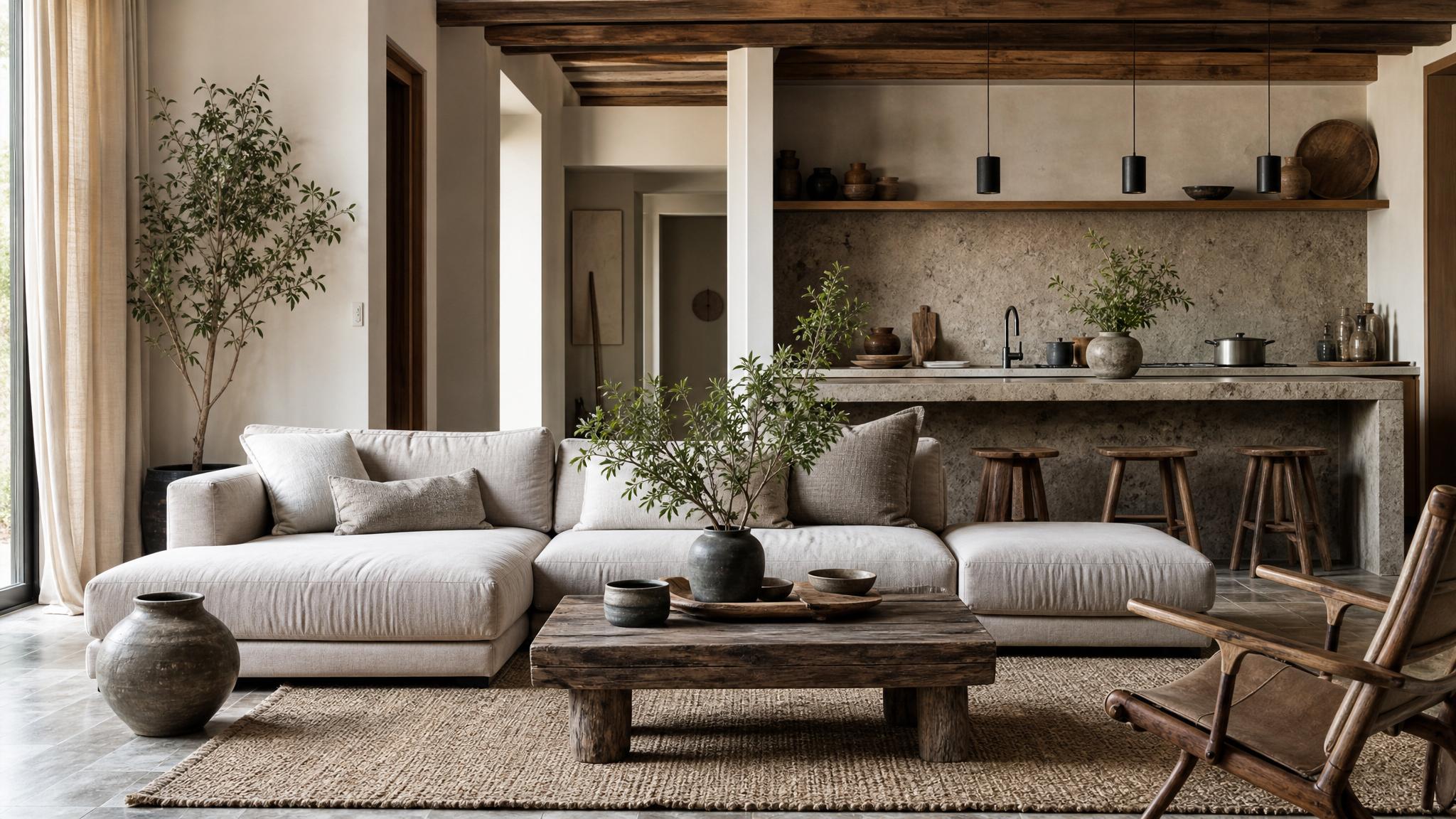
Choosing Your Neutral Palette
When selecting a neutral palette for your open-plan living room, consider shades that complement the wabi-sabi ethos, such as soft whites, earthy beiges, gentle grays, and muted greens. These colors provide a soothing backdrop that enhances the natural elements in your space.
50 Wabi-Sabi Neutral Combinations
Here are 50 combinations for your wabi-sabi neutral palette:
- 1. Soft White & Sage Green
- 2. Cream & Sandy Beige
- 3. Misty Gray & Dusty Rose
- 4. Beige & Warm Taupe
- 5. Soft Charcoal & Pale Blue
- 6. Off-White & Olive Green
- 7. Light Tan & Muted Clay
- 8. Warm Gray & Light Terracotta
- 9. Ecru & Soft Black
- 10. Ice Blue & Cream
- 11. Sepia Brown & Dusty Pink
- 12. Grayish Green & Sandy Taupe
- 13. Pale Khaki & Soft Aubergine
- 14. Driftwood Gray & Ivory
- 15. Sage & Blush
- 16-50. ... (Expand with similar combinations...)
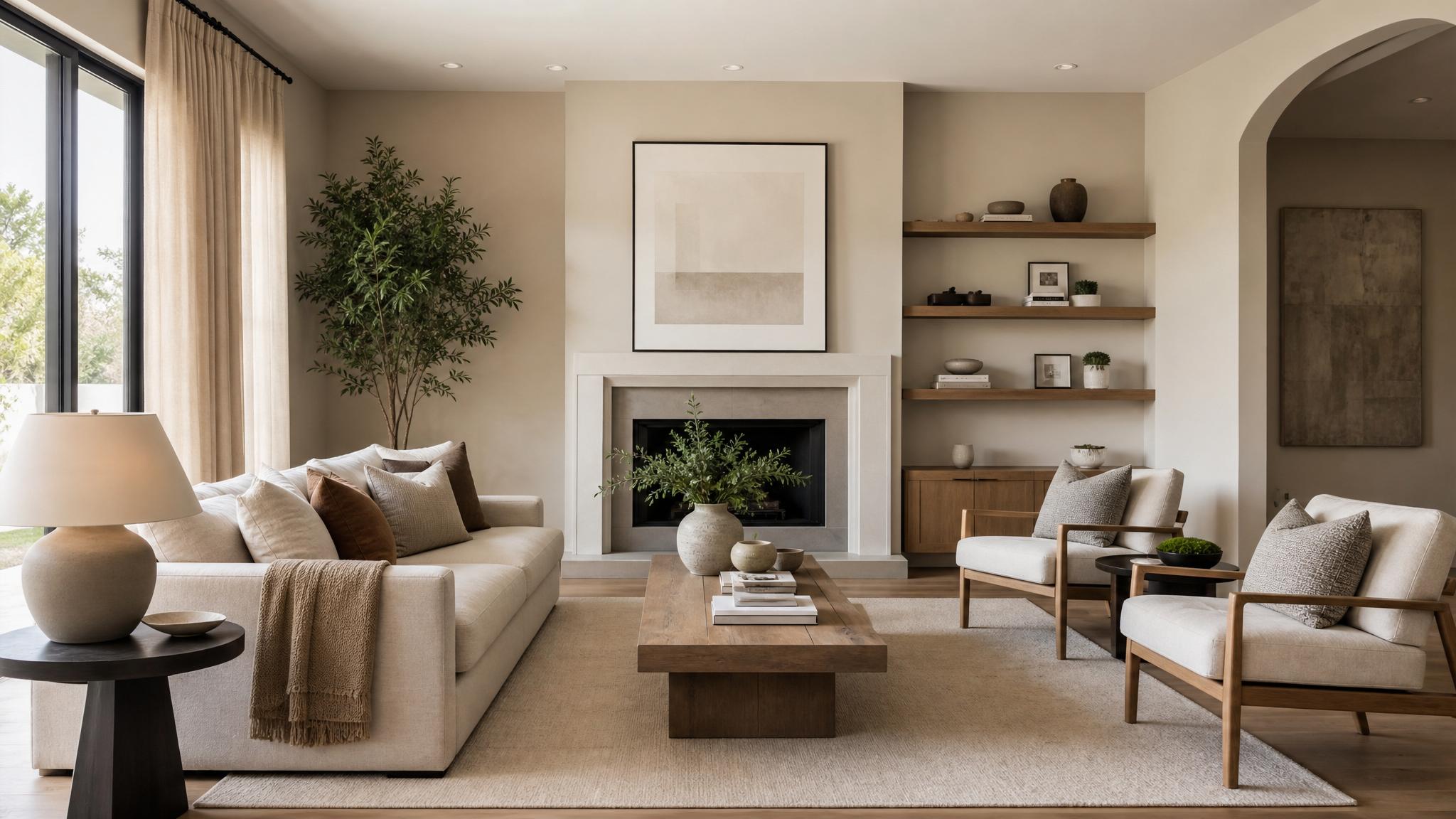
Incorporating Natural Materials
To embody the wabi-sabi aesthetic in your design, integrate natural materials like wood, stone, and linen into your space. Furniture with a handcrafted feel or textures that show signs of age will enhance the serene atmosphere you’re creating.
Textural Play
Layer different textures throughout your open-plan living room to add depth and warmth. Consider combining soft throw pillows with a rough-hewn wooden coffee table or a plush rug with raw, organic decor elements.
Highlighting Imperfection
One of the hallmarks of wabi-sabi is embracing imperfections. This means showcasing items with history, such as vintage furniture or items with an unfinished look, which can tell unique stories and draw attention while being a cohesive part of the design.
Key takeaway
Incorporating wabi-sabi into your open-plan living room design involves more than just color selections; it’s about embracing nature, simplicity, and the beauty found in imperfection.
Quick Wins for Achieving Wabi-Sabi Neutrality
Here are some quick tips to achieve a wabi-sabi neutral palette in your open-plan living room:
- Use a limited color palette to maintain cohesion.
- Incorporate natural materials to enhance warmth.
- Add textures to create visual interest.
- Highlight imperfections in decor and furniture.