Introduction to AI Virtual Staging
Try Palette Immo AI Interior Styler
Transform empty rooms and listing photos with AI virtual staging and interior design. Get started in minutes.
Get startedIn today's competitive real estate market, making properties stand out is crucial. Traditional staging techniques, while effective, can be time-consuming and expensive. Enter AI virtual staging—a game-changing technology that uses artificial intelligence to create stunning visual representations of spaces without the need for physical furniture or decor.
What is AI Virtual Staging?
AI virtual staging involves the use of software that employs machine learning algorithms to digitally furnish and decorate empty or outdated spaces. By analyzing images of a property, the AI can add furniture, color palettes, and decor items that enhance the visual appeal, helping potential buyers envision themselves in the space.
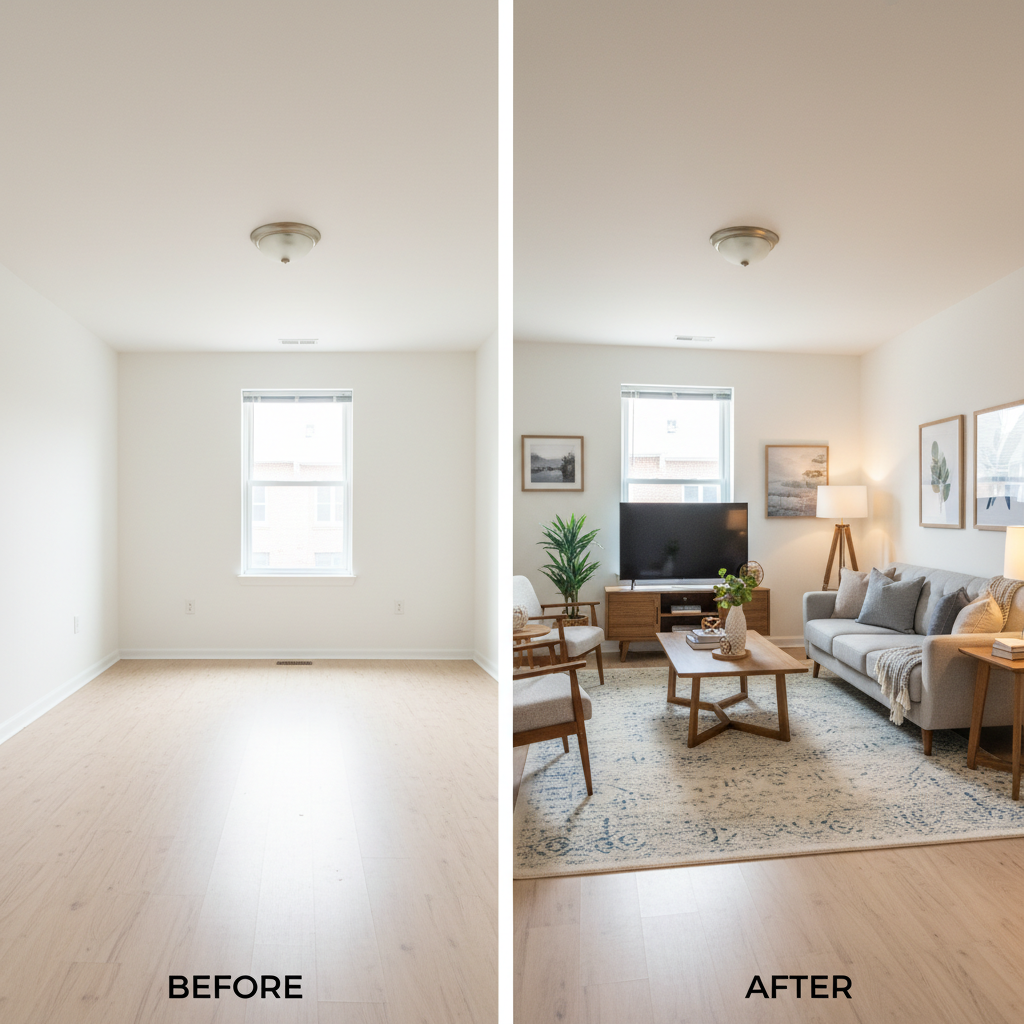
Benefits of AI Virtual Staging in Property Marketing
There are numerous advantages to using AI virtual staging for property marketing:
- Cost-Effectiveness: Virtual staging typically costs a fraction of traditional staging methods.
- Speed: Properties can be staged in a matter of hours, rather than weeks.
- Flexibility: Different styles and themes can be applied quickly, allowing for tailored marketing strategies.
- Enhanced Visuals: High-quality images attract more potential buyers online, leading to increased interest and quicker sales.
How AI Virtual Staging Impacts Property Listings
With the majority of home buyers starting their search online, the first impression is vital. AI virtual staging creates compelling visuals that grab attention and engage buyers. Listings with beautifully staged images are often shared more on social media, increasing visibility and reach.
Moreover, the ability to showcase various design styles through virtual staging allows sellers to appeal to diverse buyer demographics, optimizing their chances of making a quick sale.

Challenges and Considerations
While AI virtual staging has its benefits, it’s important to consider a few challenges:
- Over-Reliance on Technology: Properties can’t always be fully captured by images—buyers may expect to see the actual space.
- Quality Control: Not all AI staging tools produce the same quality; it’s essential to choose reliable software.
- Transparency with Buyers: It's crucial to disclose that images are digitally staged to maintain trust with potential buyers.
Key takeaway
AI virtual staging is more than a trend; it's a powerful tool that can significantly enhance property marketing strategies, enabling sellers to reach a broader audience while minimizing costs and timelines.
Conclusion
As technology continues to evolve, AI virtual staging is set to play an integral role in what property marketing looks like. By offering a cost-effective solution to present homes beautifully, the real estate industry can expect to see a major shift in how properties are marketed and sold.