Understanding Virtual Staging
Try Palette Immo AI Interior Styler
Transform empty rooms and listing photos with AI virtual staging and interior design. Get started in minutes.
Get startedVirtual staging has revolutionized how real estate professionals showcase properties. Unlike traditional staging, which may require renting furniture and decor, virtual staging uses technology to digitally furnish spaces. This approach is particularly advantageous for studio apartments, which often face unique challenges in maximizing space and appeal.
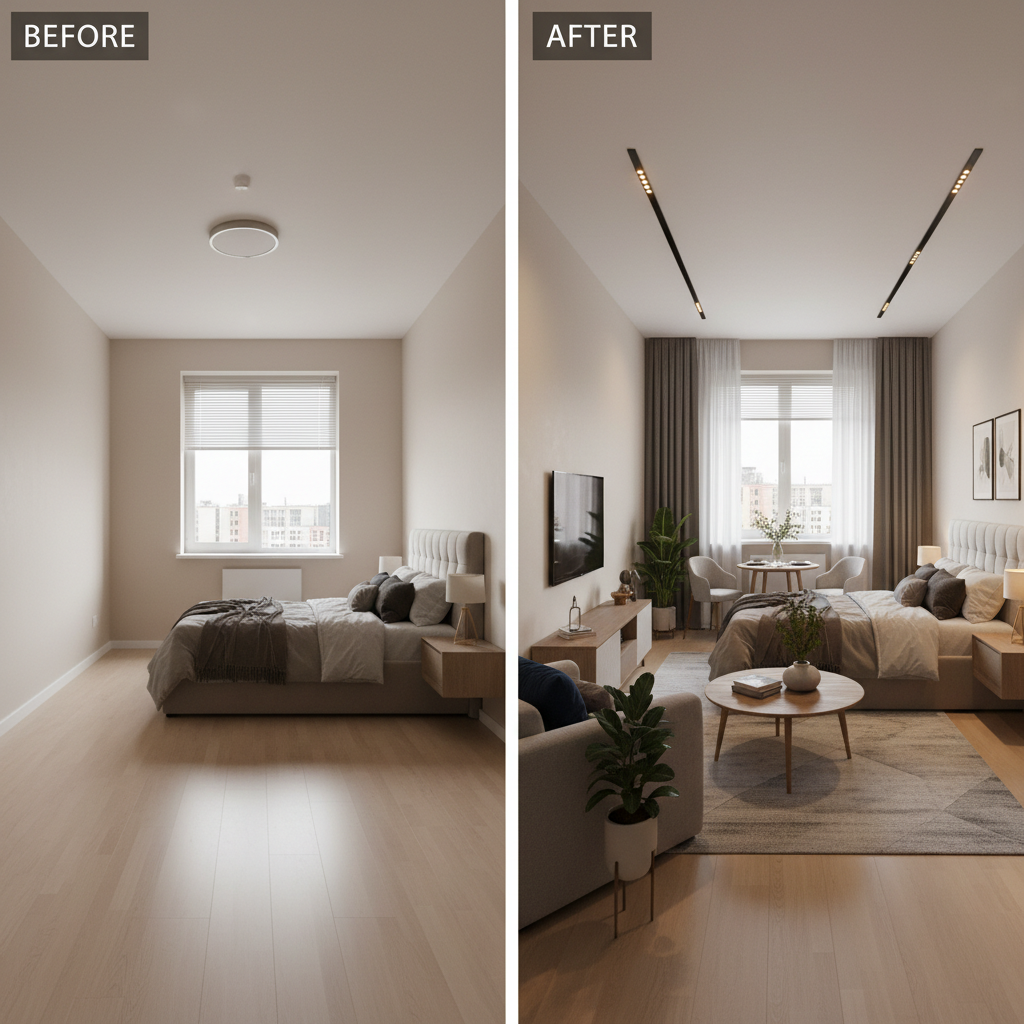
1. Create Distinct Zones with Furniture
In a studio apartment, the goal is to make the area feel larger while defining separate zones. Consider using furniture arrangements that visually separate the sleeping area from the living and dining areas. For example, a contemporary platform bed can be paired with a stylish open shelving unit to create a defined sleeping zone.
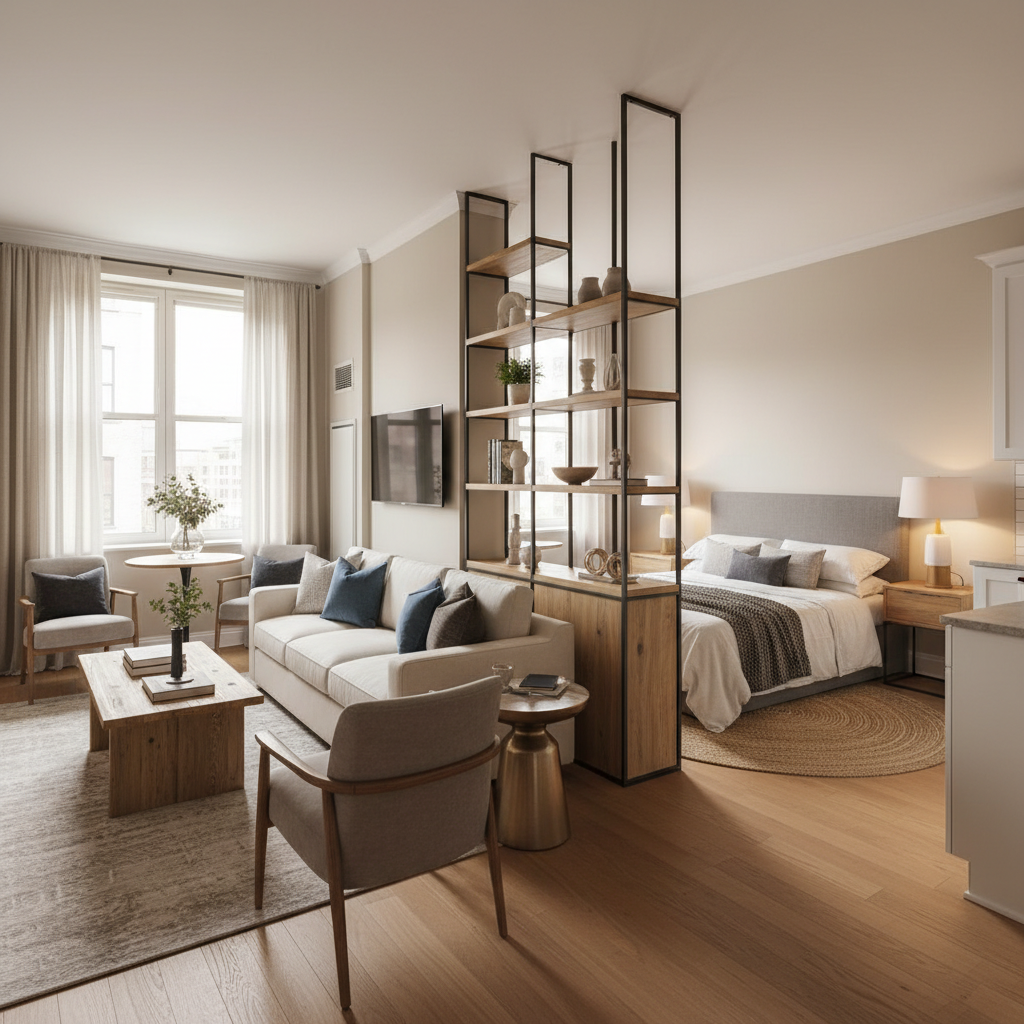
2. Incorporate Multi-functional Furniture
Given the limited space in studio apartments, multi-functional furniture is essential. Use virtual staging to showcase items like a sofa bed, a foldable dining table, or an ottoman with storage. These pieces not only save space but also serve multiple purposes, which is particularly appealing to buyers looking for practical solutions.
3. Enhance Natural Light with Design Choices
Light can dramatically affect how a space feels. In your virtual staging, utilize light colors for walls, create bright virtual lighting, and use sheer curtains that let in natural light. This enhances the perception of space and makes the studio more inviting. Consider using a virtual window view to showcase a beautiful skyline or greenery outside.
4. Use Color Palettes Strategically
Choosing the right color palette is key in staging any property, especially small spaces. Stick to neutral tones with pops of color for accents. This technique creates a cohesive look and makes the studio appear larger. For example, light grey walls with vibrant throw pillows can add personality without overwhelming the senses.
5. Stage with Lifestyle in Mind
When virtual staging, keep the target audience in mind. Highlight elements that speak to the lifestyle of potential buyers. For example, if your target demographic is young professionals, a workspace with a desk and chair can be added virtually. This helps buyers envision themselves living in the apartment and utilizing the space effectively.
Conclusion: Bringing It All Together
Virtual staging offers a flexible and innovative way to present studio apartments, making it easier to sell to interested buyers. By implementing these five ideas—creating distinct zones, using multi-functional furniture, enhancing natural light, strategically applying color, and staging with lifestyle in mind—you can highlight the strengths of a compact living space and catch the eye of prospective buyers.
Key takeaway
Virtual staging isn't just about filling an empty space; it's about creating an inviting atmosphere that connects with potential buyers' lifestyles.