Understanding Wabi-Sabi
Try Palette Immo AI Interior Styler
Transform empty rooms and listing photos with AI virtual staging and interior design. Get started in minutes.
Get startedWabi-sabi is a Japanese aesthetic concept that finds beauty in imperfection, transience, and simplicity. It encourages a lifestyle filled with appreciation for natural forms, rustic materials, and a connection to nature. When applied to interior design, wabi-sabi creates spaces that are both calming and reflective, particularly suited for modern living environments like open-plan row houses.
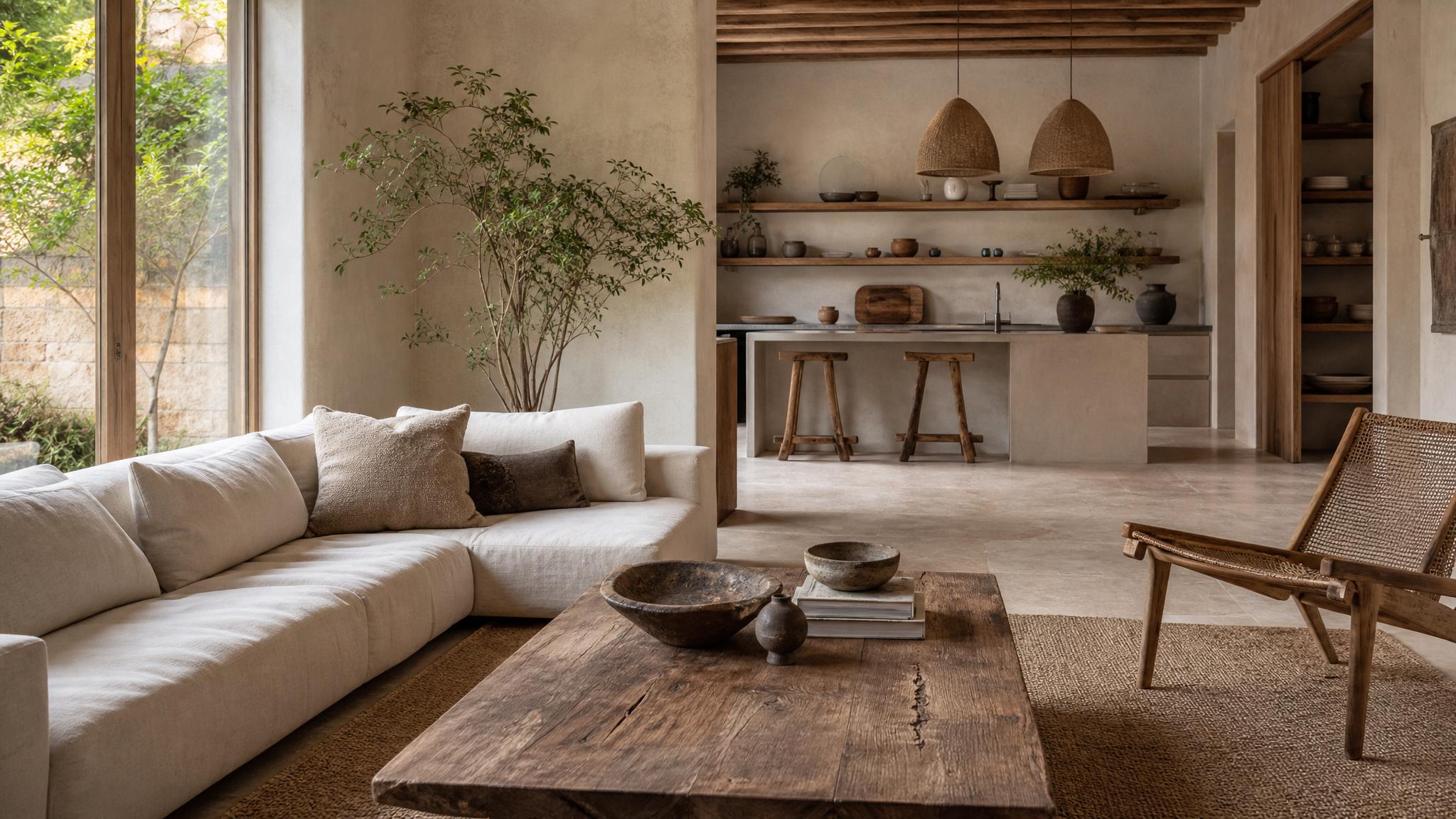
Key Elements of Wabi-Sabi Design
Incorporating wabi-sabi into your open-plan living room requires an understanding of its core principles:
- Natural Materials: Use wood, stone, and clay that have an organic and raw appearance.
- Neutral Color Palette: Opt for earth tones, muted greens, and soft grays to create an inviting atmosphere.
- Simple Forms: Choose furniture with simple, clean lines; avoid clutter and overly ornate designs.
- Imperfection Emphasis: Celebrate the beauty of handmade items, uneven textures, and vintage finds.
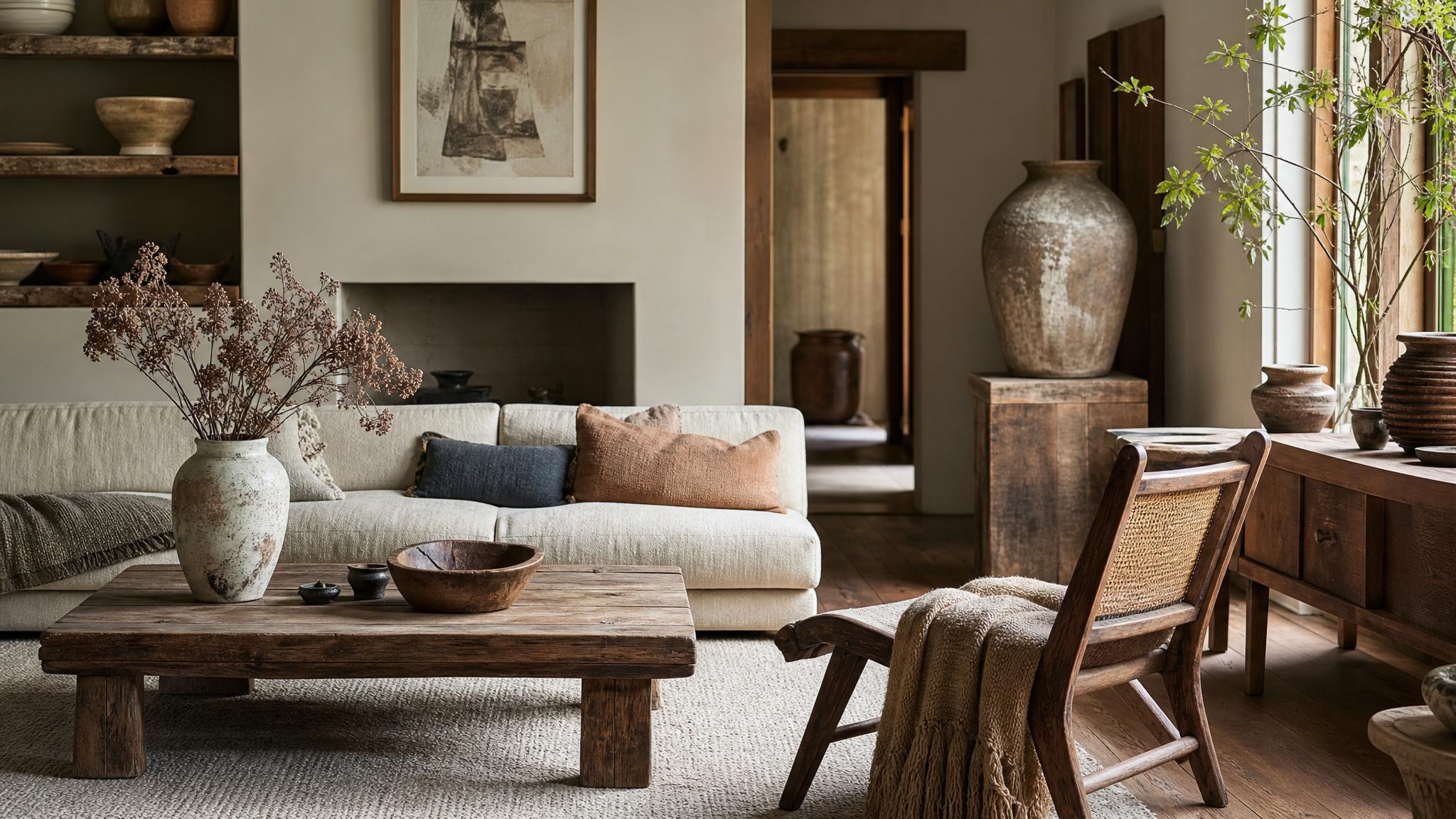
Space Planning for Open-Plan Living Rooms
When planning an open-plan living room in a row house, consider the flow of space. The aim is to create a harmonious and functional environment that reflects the wabi-sabi philosophy:
Define Zones
Even in an open space, it can be helpful to define different zones for various activities. Use rugs, furniture placement, or even plant arrangements to separate the seating area from dining or workspaces.
Flexible Furniture
Incorporate flexible furniture arrangements that can be easily moved. Benches, ottomans, and simple tables can allow for adaptability in layout while keeping the space uncluttered.
Color and Texture Integration
Integrating colors and textures in a wabi-sabi style is pivotal. Here are some ideas:
Color Choices
Choose hues inspired by nature; think muted browns, greens, and whites. These colors not only promote calmness but also accentuate the design's simplicity and sophistication.
Texture Layering
Layer different textures to create warmth and depth. Combine materials such as wool, linen, unfinished wood, and stone. This approach helps create a tactile experience that resonates with wabi-sabi's appreciation of the natural world.
Key takeaway
Creating a wabi-sabi space in your row house living room is about embracing the imperfect and valuing the beauty of nature, which contributes to a serene and welcoming environment.
Decorative Elements and Finishing Touches
Decorate your open-plan living room with items that reflect your personal journey while honoring the wabi-sabi aesthetic. Consider these elements:
Art and Accessories
Select art pieces that convey a story or reflect nature. Handmade pottery, abstract art in earthy tones, and textiles that exhibit craftsmanship are excellent choices.
Plants and Natural Elements
Incorporating plants will breathe life into your space. Use simple, earthy pots for greenery and allow them to grow naturally and gracefully, enhancing the organic feel of your living room.