Understanding Open-Plan Living
Try Palette Immo AI Interior Styler
Transform empty rooms and listing photos with AI virtual staging and interior design. Get started in minutes.
Get startedOpen-plan living has become a popular choice for tiny homes as it creates a sense of space and fluidity. By removing unnecessary walls, these homes offer a seamless transition between living, dining, and kitchen areas. This design approach not only enhances the overall aesthetics but also promotes better interaction among family members and guests.
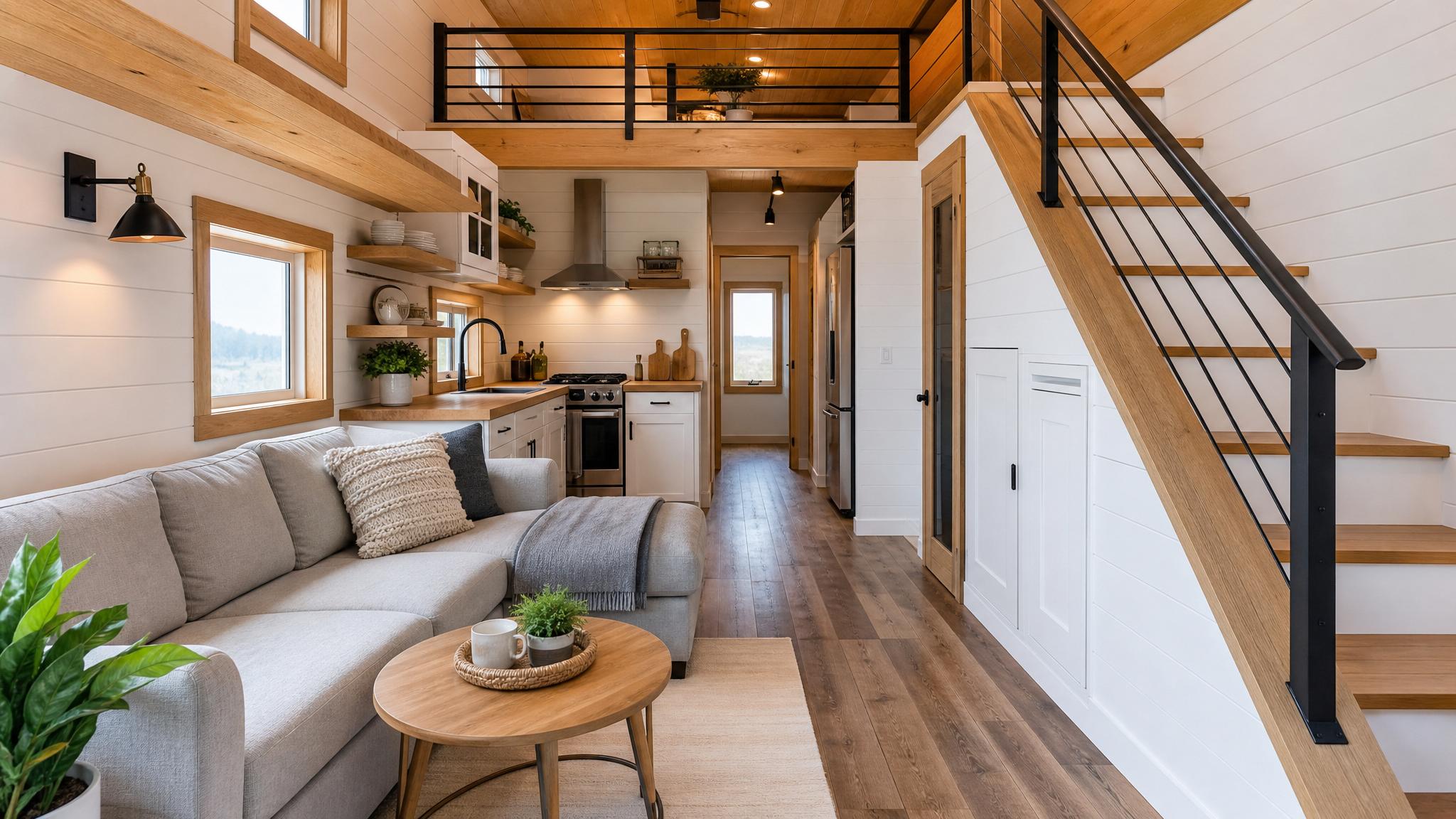
Key Elements of Modern Space Plans
Modern space plans for open-plan living rooms in tiny homes should focus on key elements that maximize both functionality and style:
- Multi-Functional Furniture: Choosing versatile furniture can transform your space. For example, a sofa bed or an expandable dining table can serve multiple purposes.
- Defined Areas: Use rugs, furniture placement, and lighting to create distinct zones for different activities in your open space.
- Natural Light: Incorporating large windows or glass doors can enhance your living space by bringing in natural light, making it feel larger and more inviting.
Best Space Plans for Tiny Open-Plan Living Rooms
When designing an open-plan living room in a tiny home, consider the following space plans:
1. The Cozy Corner
This layout features a small sectional sofa, a coffee table, and a compact dining set in a corner arrangement. It maximizes seating while maintaining flow.
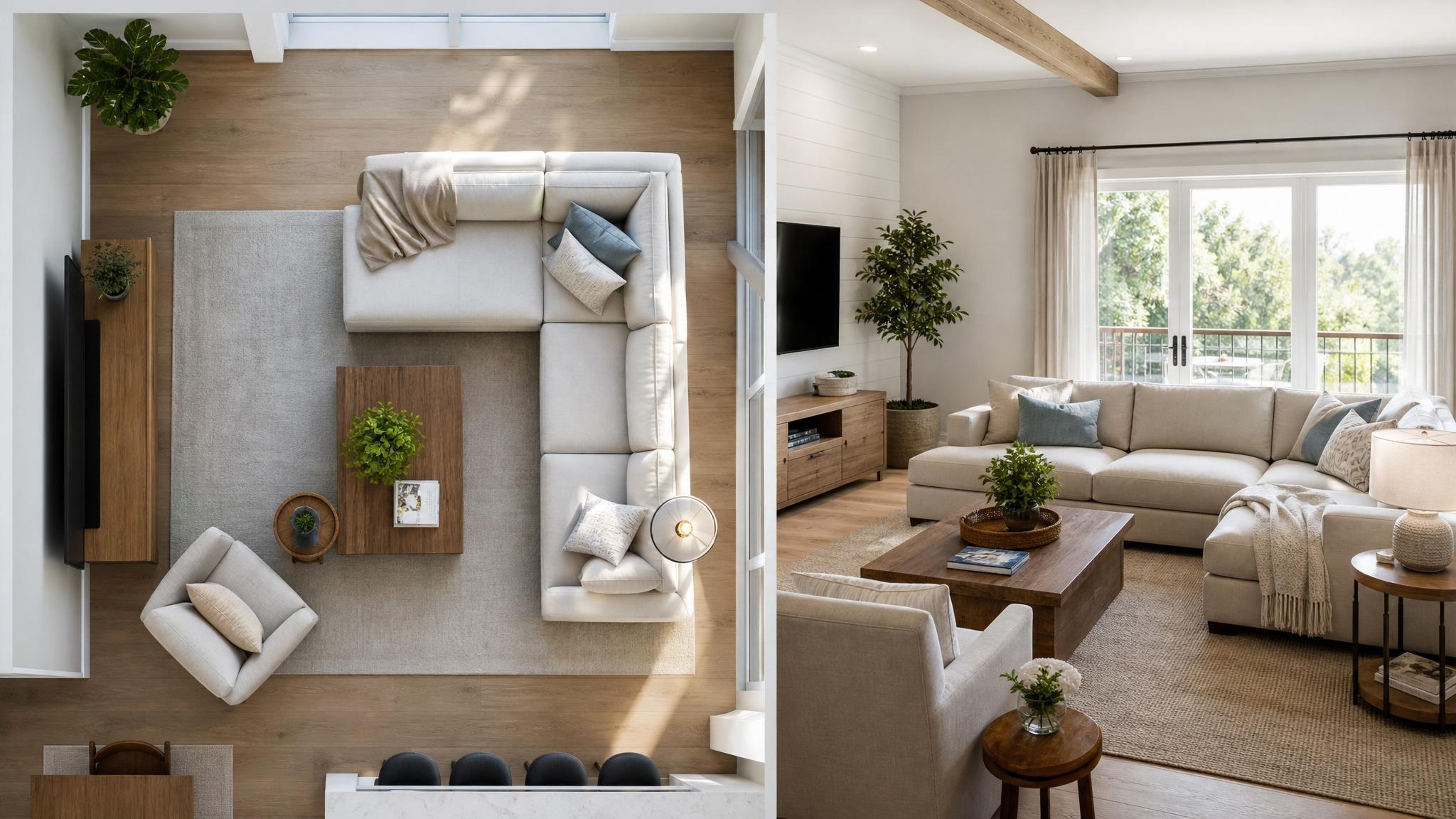
2. The L-Shaped Design
This plan utilizes an L-shaped sofa, allowing for a more social interaction area while still defining the living space from the kitchen.
3. The Minimalist Approach
Focusing on minimalism, this design features sleek furniture pieces with clean lines and limited decor, emphasizing functionality.
Decor Tips for Open-Plan Living Rooms
To enhance your open-plan living room's aesthetic, consider the following decor tips:
- Consistent Theme: Choose a color scheme and style that flows throughout the space to create cohesion.
- Vertical Storage: Use vertical space for storage solutions to keep the living area clutter-free.
- Artful Focal Points: Incorporate art pieces or decorative units as focal points to draw attention and create interest.
Key takeaway
Maximizing an open-plan living room in a tiny home requires thoughtful design choices that blend function with aesthetic appeal. Using space creatively ensures comfort and style coexist harmoniously.
Conclusion
Designing an open-plan living room in a tiny home: success lies in maximizing space, utilizing functional furniture, and maintaining a consistent decor style. With creativity and careful planning, you can create an inviting and stylish environment that feels spacious and welcoming.