Understanding Industrial Design
Try Palette Immo AI Interior Styler
Transform empty rooms and listing photos with AI virtual staging and interior design. Get started in minutes.
Get startedIndustrial design emerged from the 20th-century modernism trend and is characterized by its raw materials, functional features, and minimalist aesthetic. In small living rooms, embracing this style can create an airy, uncluttered space while retaining warmth and personality. Elements such as exposed brick walls, metal accents, and reclaimed wood are quintessential to this design ethos.
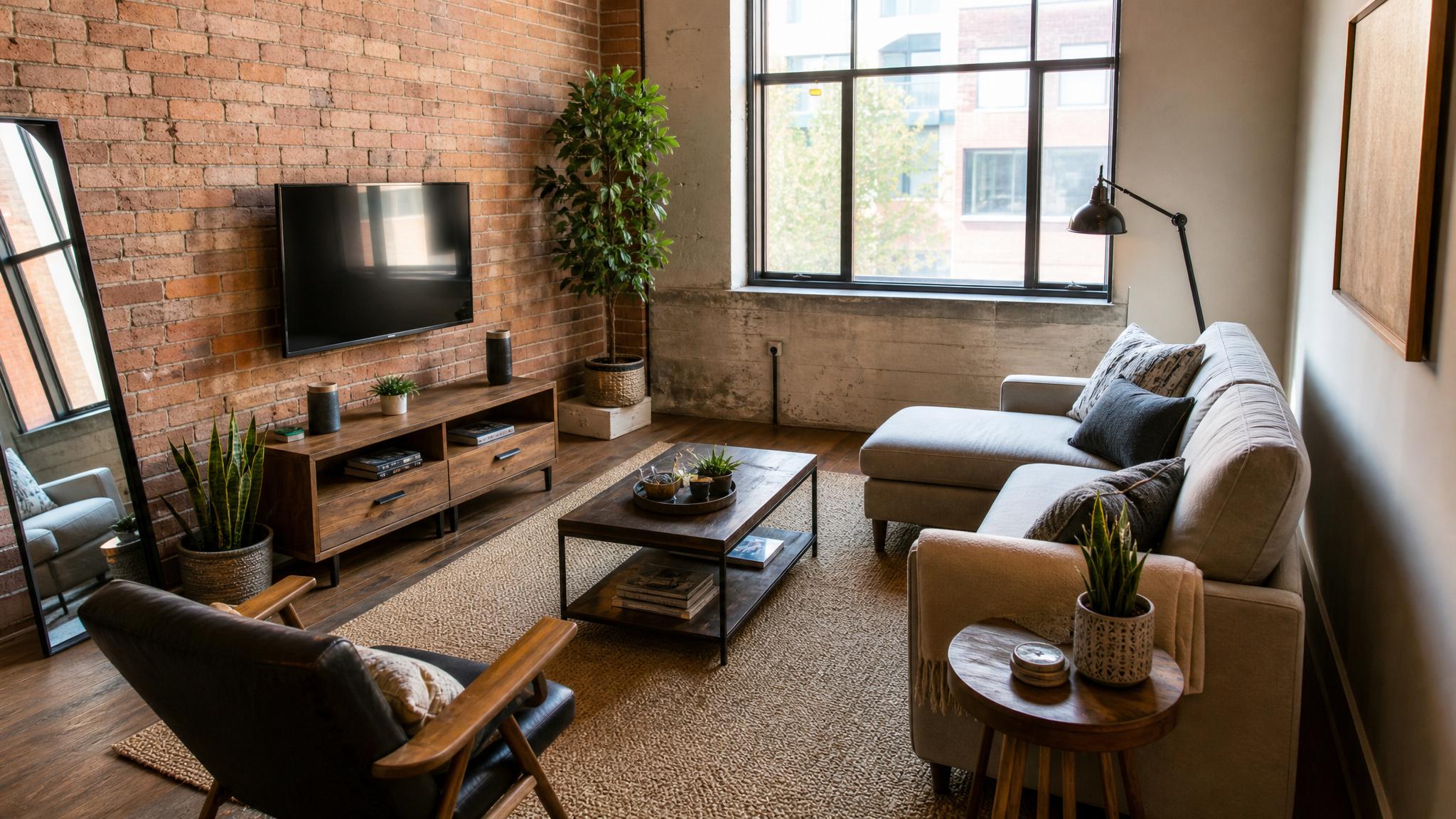
Maximizing Space in Your Small Living Room
In townhouses, space can often be limited. Here are some layout strategies to make the most out of your square footage:
1. Use a Corner Sofa
A corner sofa can optimize seating without taking up too much space. Look for ones with clean lines and a muted color palette. This not only blends well with the industrial theme but also helps in creating an inviting atmosphere.
2. Multi-Functional Furniture
Opt for coffee tables that double as storage solutions or ottomans that can be used for seating and footrests. This approach keeps the space uncluttered, allowing for flexibility in your living room layout.
3. Layer Your Lighting
Industrial design thrives on good lighting. Use a mix of floor lamps, pendant lights, and wall sconces to layer your space with different light sources. Adjust the intensity of your lighting to make the room feel cozier during the evenings.
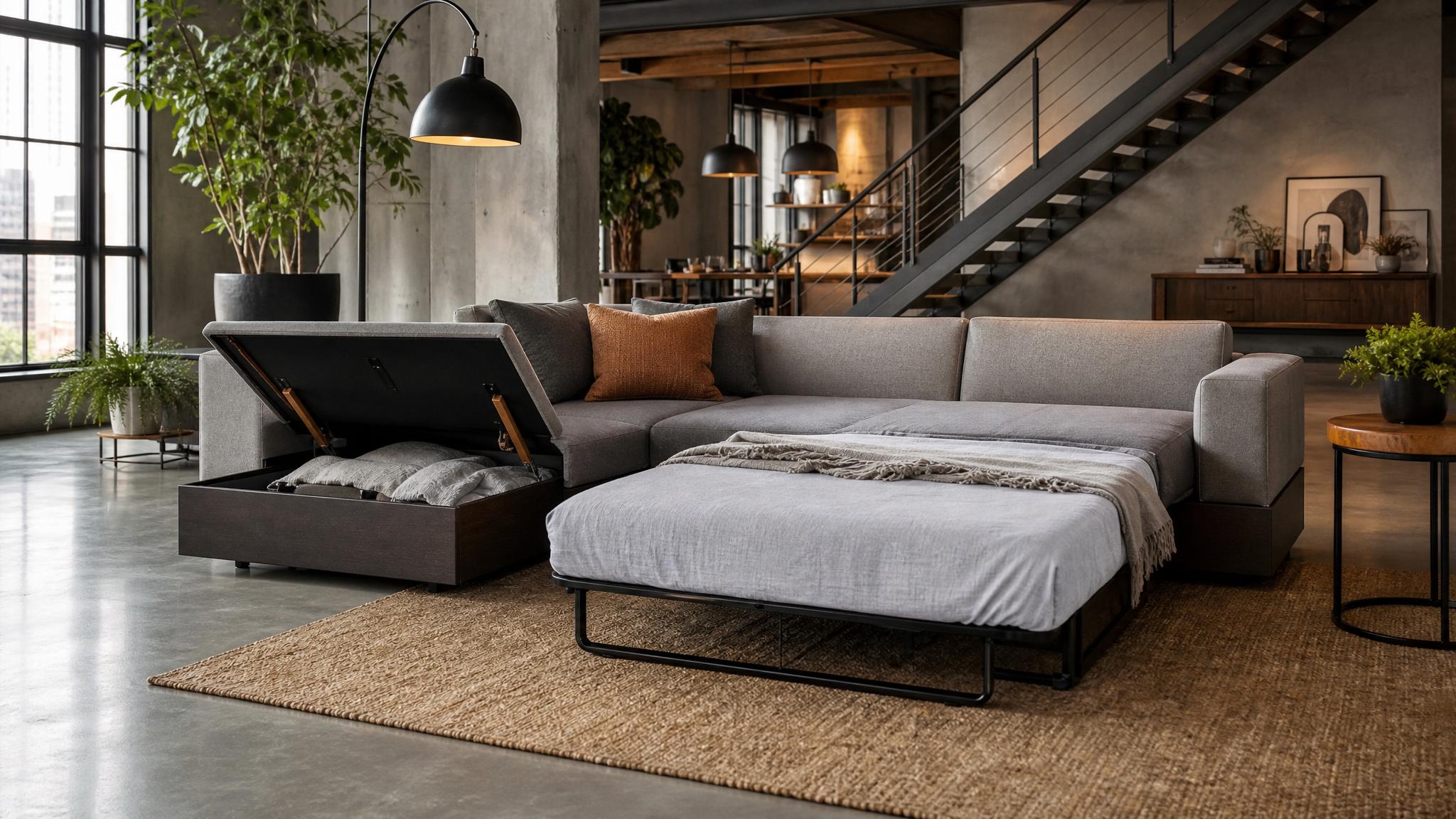
Color Schemes for Small Spaces
When it comes to color in an industrial living room, consider the following:
- Neutral Tones: Mixing shades of gray, black, and white keeps the room feeling spacious.
- Accent Colors: Use bold accent colors through accessories like cushions or artwork to add character without overwhelming the space.
- Natural Elements: Wood tones, like those found in furniture or flooring, help to warm up the industrial feel and create a cozy atmosphere.
Furniture Placement Techniques
Strategic furniture placement can enhance how space is perceived:
1. Create Distinct Zones
If your living room is part of an open floor plan, use furniture placement to define areas. For example, your sofa can face a coffee table, creating a conversational area, while a bookshelf can serve as a room divider.
2. Keep Pathways Clear
Make sure to leave a clear pathway through your living room to facilitate movement between spaces. This improves usability and can make the room feel larger.
Key takeaway
Incorporating industrial elements can significantly enhance the design of a small living room. By prioritizing multi-functional furniture, smart layouts, and neutral color schemes, you can create a stylish yet practical living space.