Understanding Wabi-Sabi in Interior Design
Try Palette Immo AI Interior Styler
Transform empty rooms and listing photos with AI virtual staging and interior design. Get started in minutes.
Get startedWabi-sabi is a Japanese aesthetic that celebrates the beauty of imperfection, transience, and simplicity. When applied to interior design, especially in children’s spaces, it emphasizes a relaxed and natural ambiance.
Why Choose Wabi-Sabi for Your Kids' Bedroom?
A wabi-sabi bedroom for kids encourages creativity and individuality. It allows children to express themselves in a space that feels personalized yet uncomplicated. The materials and colors used tend to evoke a sense of calm and comfort, making it a perfect atmosphere for learning and play.
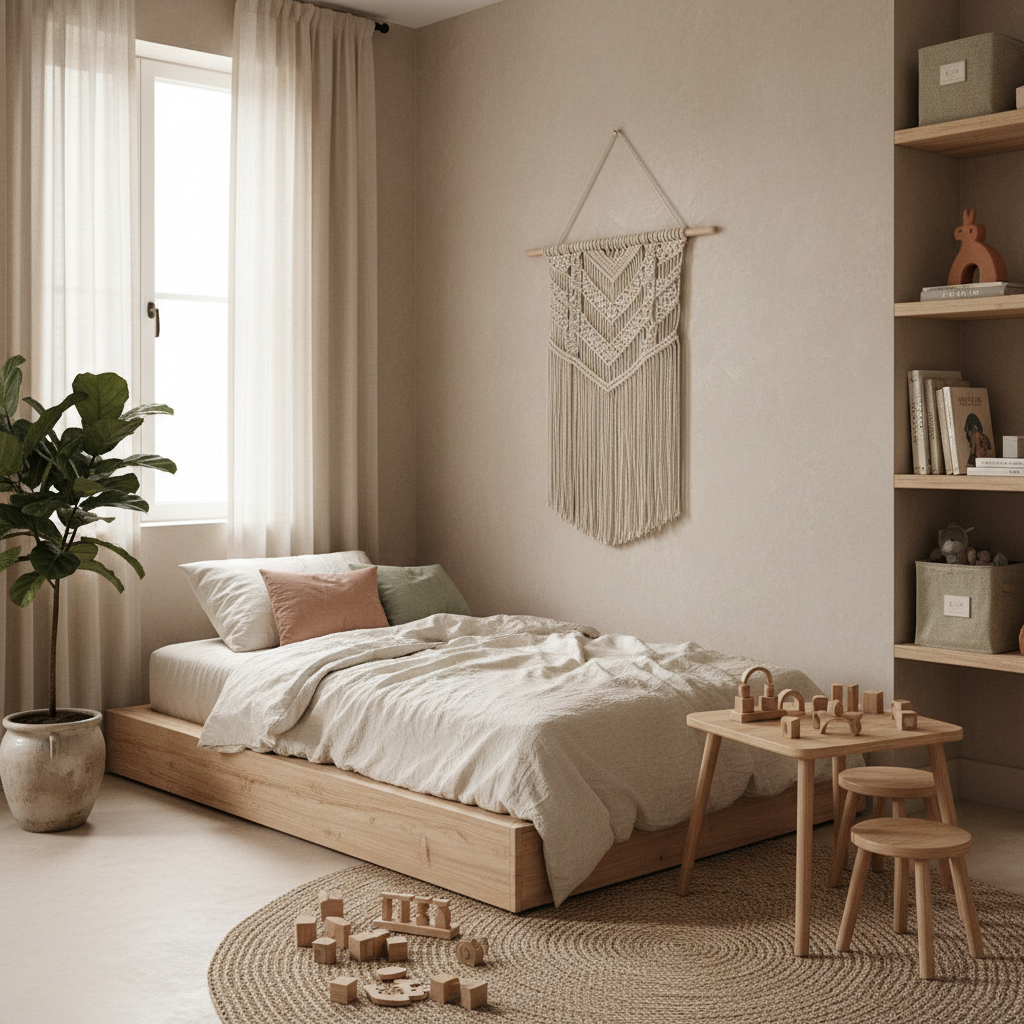
AI Interior Design Prompts for a Wabi-Sabi Kids Bedroom
Creating this style in just 60 seconds requires the right prompts. Here are some quick ideas to transform ordinary spaces into a wabi-sabi haven:
- 1. Color Palette: Focus on muted and earthy tones like sage green, soft ochre, and powder blue.
- 2. Materials: Opt for organic materials such as bamboo, reclaimed wood, and linen.
- 3. Decor: Use handmade or vintage items that show signs of wear, like a weathered wooden rocking chair or a quilt stitched from various fabrics.
- 4. Layout: Embrace a free-flowing layout that allows for movement and play without rigid boundaries.
- 5. Wall Art: Incorporate child-friendly art that celebrates nature, such as pressed flowers in frames or hand-painted canvases.
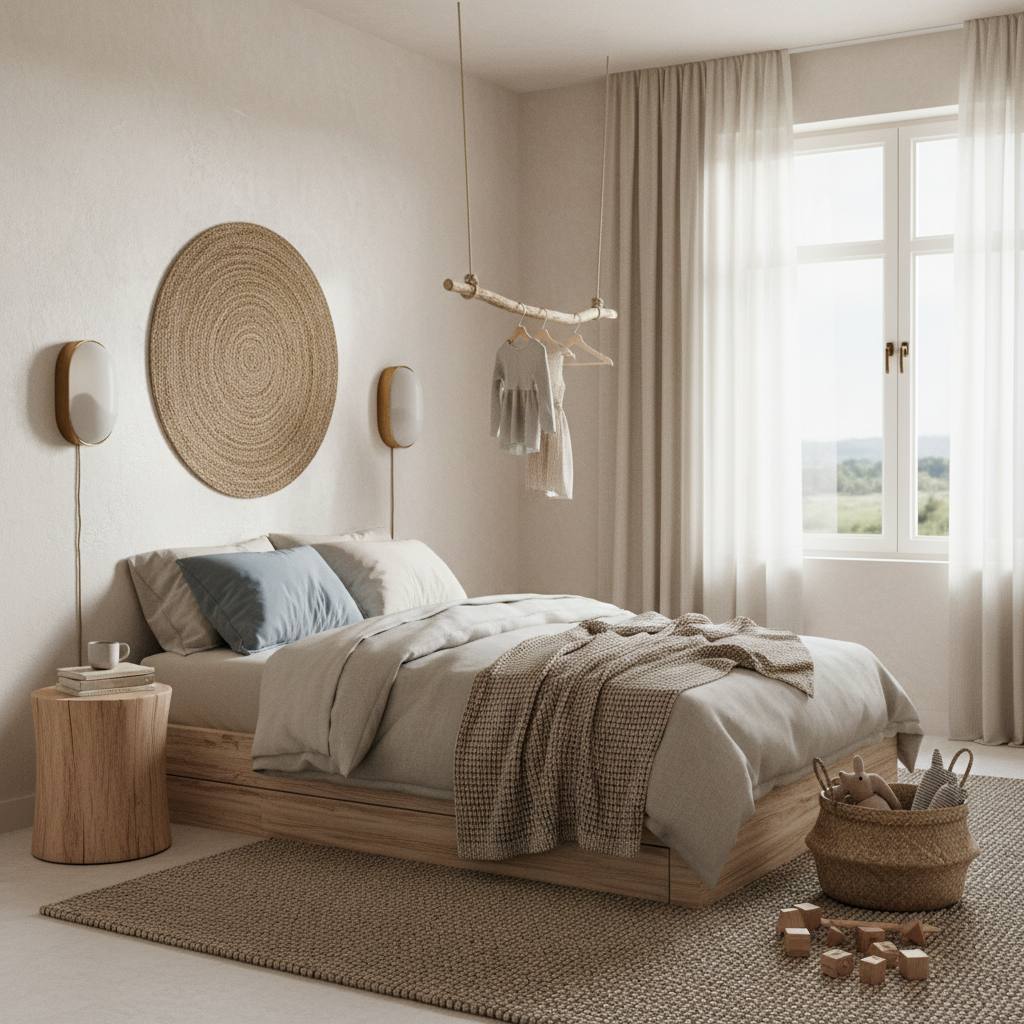
Inspiring Examples of Wabi-Sabi Kids Bedrooms
To further illustrate this concept, let’s look at a couple of examples:
- A space featuring a low, soft bed draped in a simple cotton duvet, surrounded by a variety of textured pillows made from natural fibers.
- Walls adorned with art made by the children themselves, framed in imperfect wood frames, celebrating their creativity while enhancing the wabi-sabi aesthetic.
These examples highlight how easy it can be to create a wabi-sabi environment that resonates with both functionality and beauty.
Creating Your Wabi-Sabi Kids Bedroom: Steps to Take
Follow this simple process to ensure your design captures the essence of wabi-sabi:
- Step 1: Declutter the space to create a sense of calm.
- Step 2: Choose your color palette and start with paint or bedding that reflects those natural tones.
- Step 3: Incorporate furniture made from recycled materials or with a vintage feel.
- Step 4: Add decor items that are unique and have a story—think hand-me-downs or crafty projects.
- Step 5: Allow the space to breathe and grow with your child. Their creativity will shape the room over time.
Key takeaway
Wabi-sabi isn't just a design choice; it's a lifestyle approach. By embracing imperfection and celebrating the unique quirks of a child's personality, you create a nurturing environment that promotes growth and creativity.