Understanding Transitional Hallways
Try Palette Immo AI Interior Styler
Transform empty rooms and listing photos with AI virtual staging and interior design. Get started in minutes.
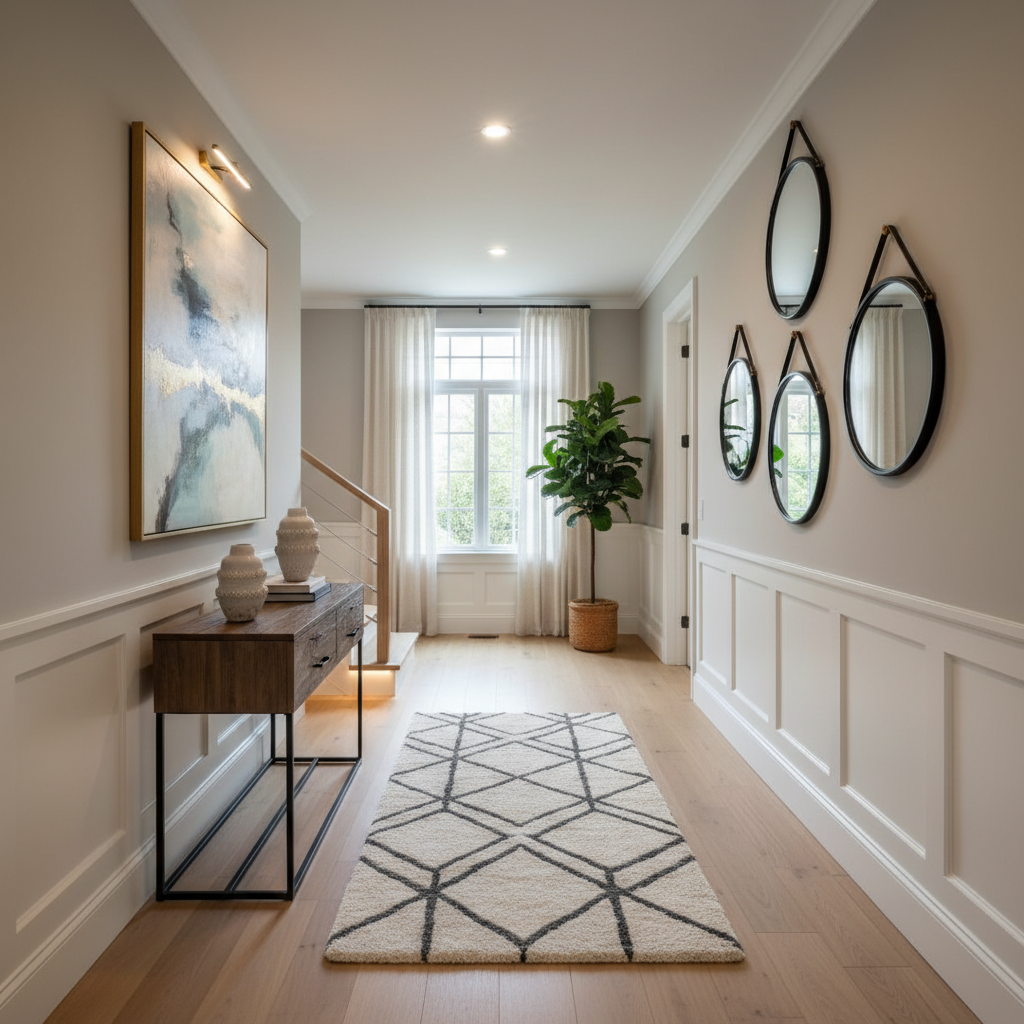
Get startedA transitional hallway serves as the connective space between different rooms in your home. It sets the tone for the adjoining spaces, reflecting the overall style and personality of the home. This area can easily be overlooked, yet with the right design, it can become a beautiful feature of your home.
Why Use AI for Interior Design?
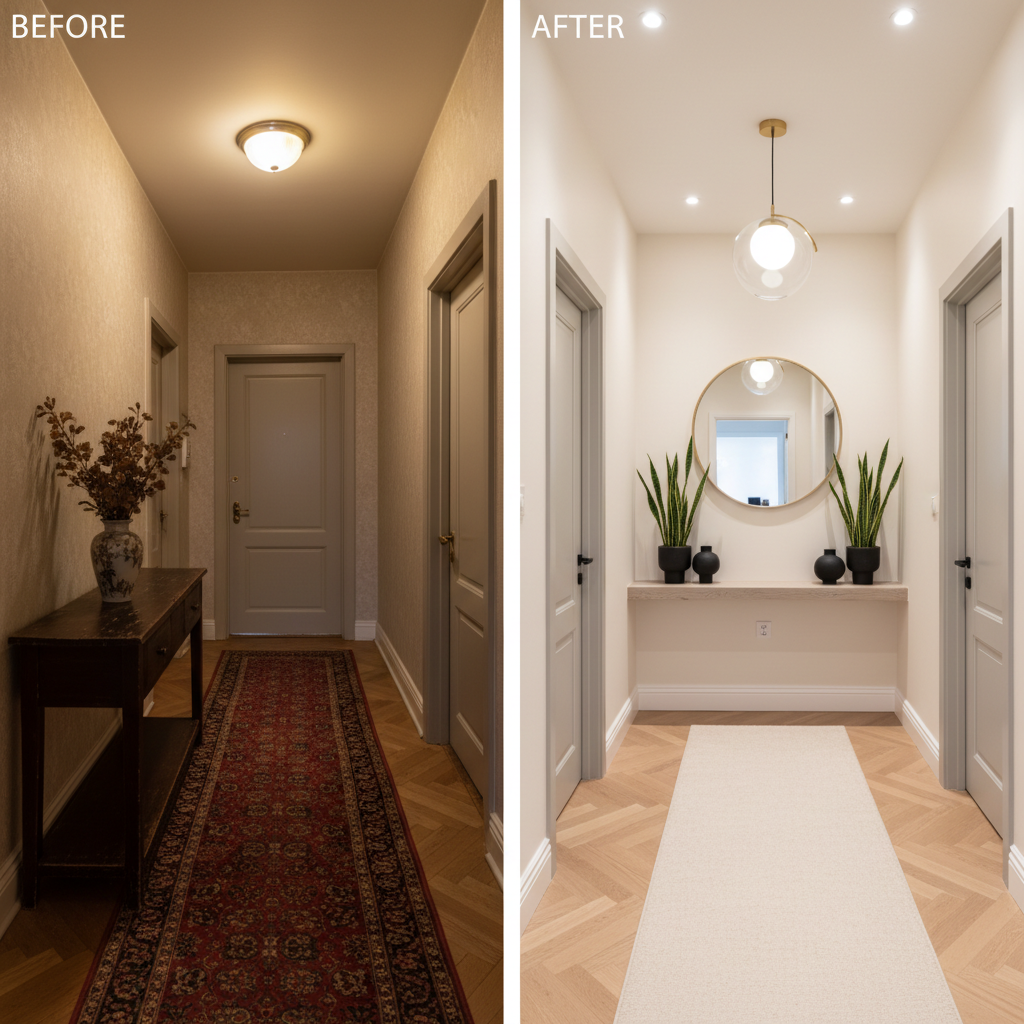
AI tools like Palette.immo offer innovative solutions for transforming spaces quickly and efficiently. Whether you're staging a home for sale or refreshing your current living space, AI can provide tailored design ideas that suit your style.
By inputting specific prompts, you can generate multiple design variations in a matter of seconds, making it easier to envision your ideal space.
Effective AI Prompts for Designing a Transitional Hallway
When using AI for interior design, the prompts you choose can significantly influence the outcome. Here are some effective prompts to create a stunning transitional hallway:
- Color Palette: 'Create a calming blue and white color scheme for a small transitional hallway.'
- Style Fusion: 'Blend modern and classic elements in a hallway design.'
- Lighting Focus: 'Incorporate natural light and statement lighting in a transitional space.'
- Wall Treatments: 'Explore textures and wallpaper ideas for a cozy hallway.'
- Accessorizing: 'Suggest decorative elements like mirrors or sconces for a stylish touch.'
Applying the Design
Once you have generated your design ideas, it’s time to apply them. Here’s how:
- Visualization: Use augmented reality features in AI tools to visualize how your new design will look in real-time.
- Material Selection: Choose materials that align with the generated prompt and your budget.
- DIY or Professional Help: Decide if you’ll tackle the design yourself or hire professionals based on the complexity.
Key takeaway
AI interior design prompts empower homeowners to quickly visualize and implement beautiful designs, even in often-neglected spaces like hallways.
Common Mistakes to Avoid When Designing Hallways
When designing hallways, people often make several common mistakes:
- Ignoring Scale: Ensure the design elements are in proportion to the size of the hallway.
- Overcrowding: Avoid cramming too many items; keep it simple to maintain an open feel.
- Neglecting Lighting: Hallways should be well-lit to feel inviting—consider options like recess lighting or wall sconces.
Conclusion
Designing a transitional hallway can be a quick and rewarding project with the right AI tools and prompts. In just 60 seconds, you can generate creative ideas that bring your vision to life. Embrace technology and leave behind the tedious trial-and-error approach to interior design.