Understanding Lighting in Photography
Try Palette Immo AI Interior Styler
Transform empty rooms and listing photos with AI virtual staging and interior design. Get started in minutes.
Get startedLighting is one of the most crucial elements when it comes to photography, especially in small living rooms where space can feel tight. Proper lighting not only enhances the aesthetic appeal of your images but also creates a mood and highlights the best features of a room.
Natural Light Is Your Best Friend
Utilizing natural light can drastically improve the quality of your photos. Here are some tips:
- Always shoot during golden hours—early morning or late afternoon.
- Position your camera facing window light for even illumination.
- Avoid shooting in the middle of the day when harsh sunlight creates unflattering shadows.
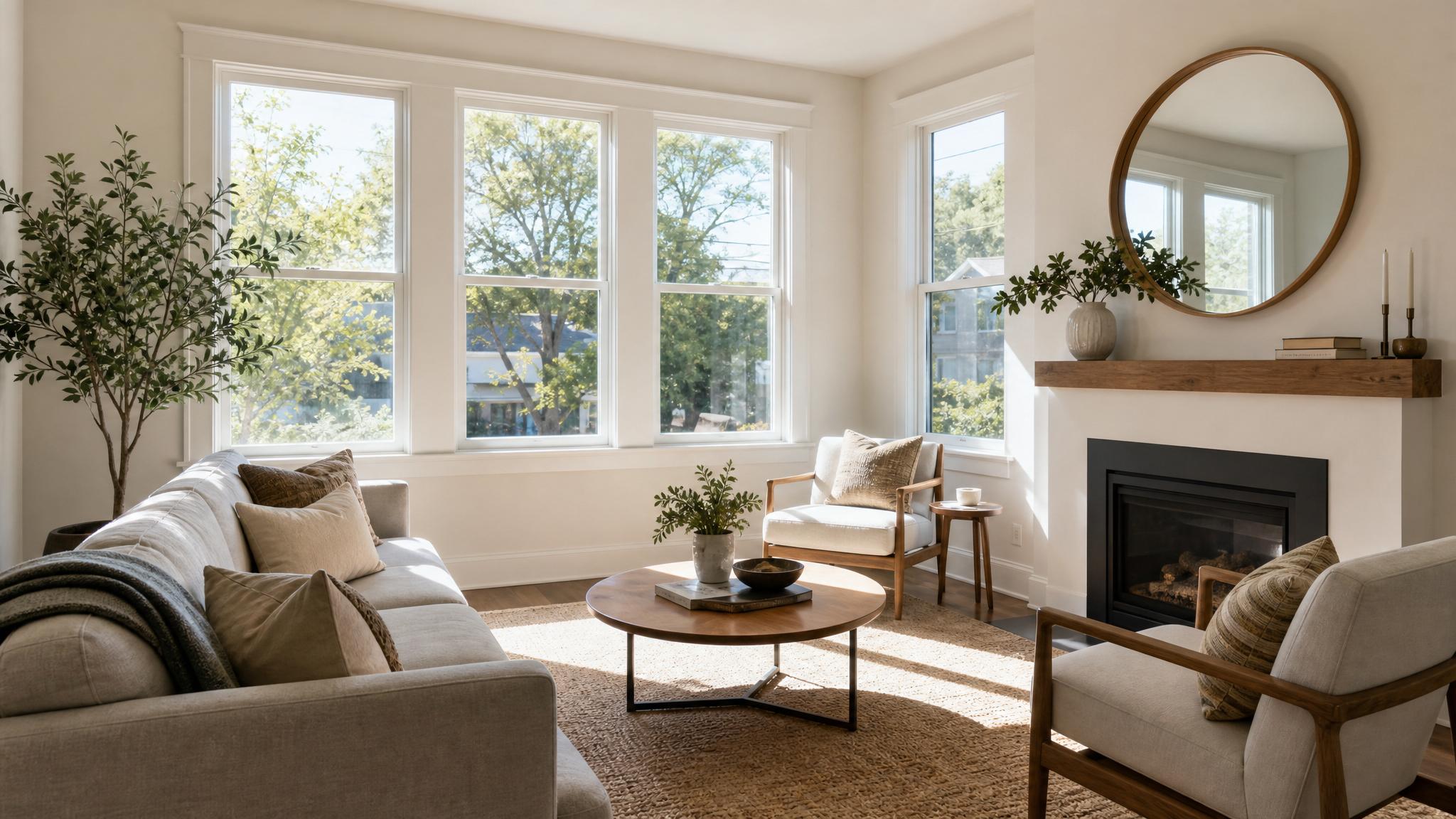
Choose the Right Time of Day
The time of day significantly impacts how light enters your small living room. Here’s how to choose wisely:
- Early in the morning can provide soft, diffused lighting.
- Late afternoons yield warm, inviting hues.
- Consider the season as well; summer generally brings brighter light than winter.
Using Artificial Light to Enhance Your Small Living Room Photos
While natural light is essential, sometimes you need to use artificial lighting sources to brighten up your images.
Different Light Sources
Using a combination of different light sources can yield stunning results:
- Softbox lights can mimic natural light.
- Table lamps with warm bulbs can enhance coziness.
- Fairy lights or LED strips can add allure and charm.
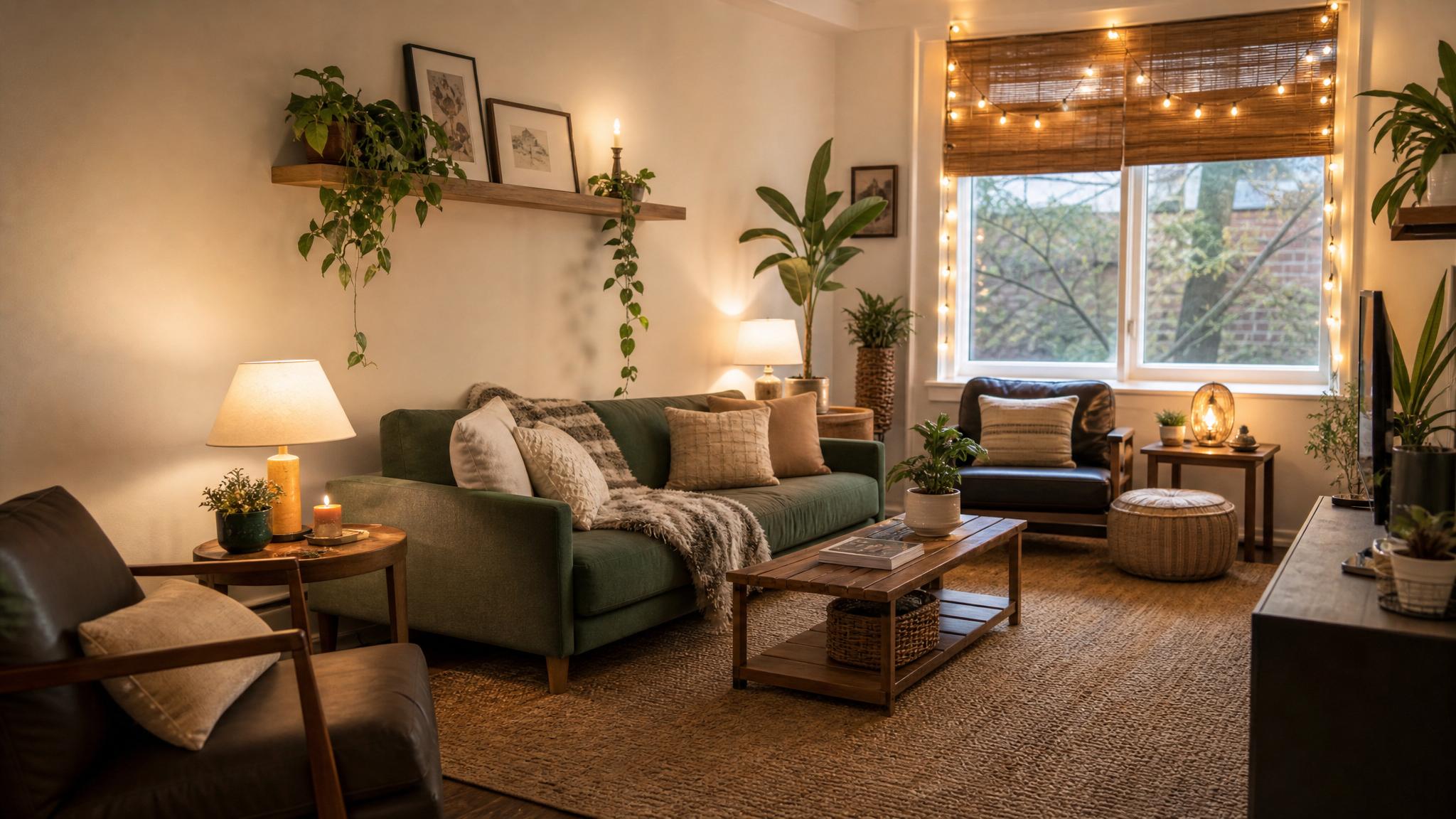
Lighting Techniques to Consider
Incorporating some common lighting techniques can enhance your photos:
- Use bounced light by directing lamps towards walls or ceilings to soften shadows.
- Experiment with long exposures if you have access to a tripod.
- Try shooting at a higher ISO if your camera allows to compensate for low-light scenarios.
Composition Tips for Small Living Room Photography
The way you compose your shots can also play a significant role in how lighting is showcased in your small living room photos.
Angles and Framing
Finding the right angle can make a small living room feel more spacious:
- Shoot from a corner to capture more of the room.
- Use leading lines, such as the edges of furniture, to draw the eye into the space.
- Frame your shots with doorways, windows, or furniture to create depth.
Declutter and Arrange
Before photographing, ensure the room is tidy and well-arranged:
- Remove unnecessary items to avoid a cluttered look.
- Arranging furniture to create open space can help the room feel larger.
- Don’t forget to consider what’s outside the window; it can change the perception of light.
Post-Processing Techniques to Enhance Your Photos
Once you’ve taken your photos, a little post-processing can elevate them further:
Edit for Optimal Lighting
Editing your photos can make a world of difference:
- Adjust brightness and contrast to bring out details.
- Apply filters that may enhance the lighting quality, but don’t overdo it.
- Consider cropping to improve composition.
Key takeaway
Combining natural and artificial lighting techniques with thoughtful composition and post-processing can transform your small living room photos from ordinary to extraordinary.