Introduction to Transitional Open-Plan Living Rooms
Try Palette Immo AI Interior Styler
Transform empty rooms and listing photos with AI virtual staging and interior design. Get started in minutes.
Get startedTransitional open-plan living rooms seamlessly blend traditional and contemporary design elements, creating a sophisticated yet inviting space. This approach promotes a sense of flow, making the environment conducive for both everyday family life and elegant entertaining.
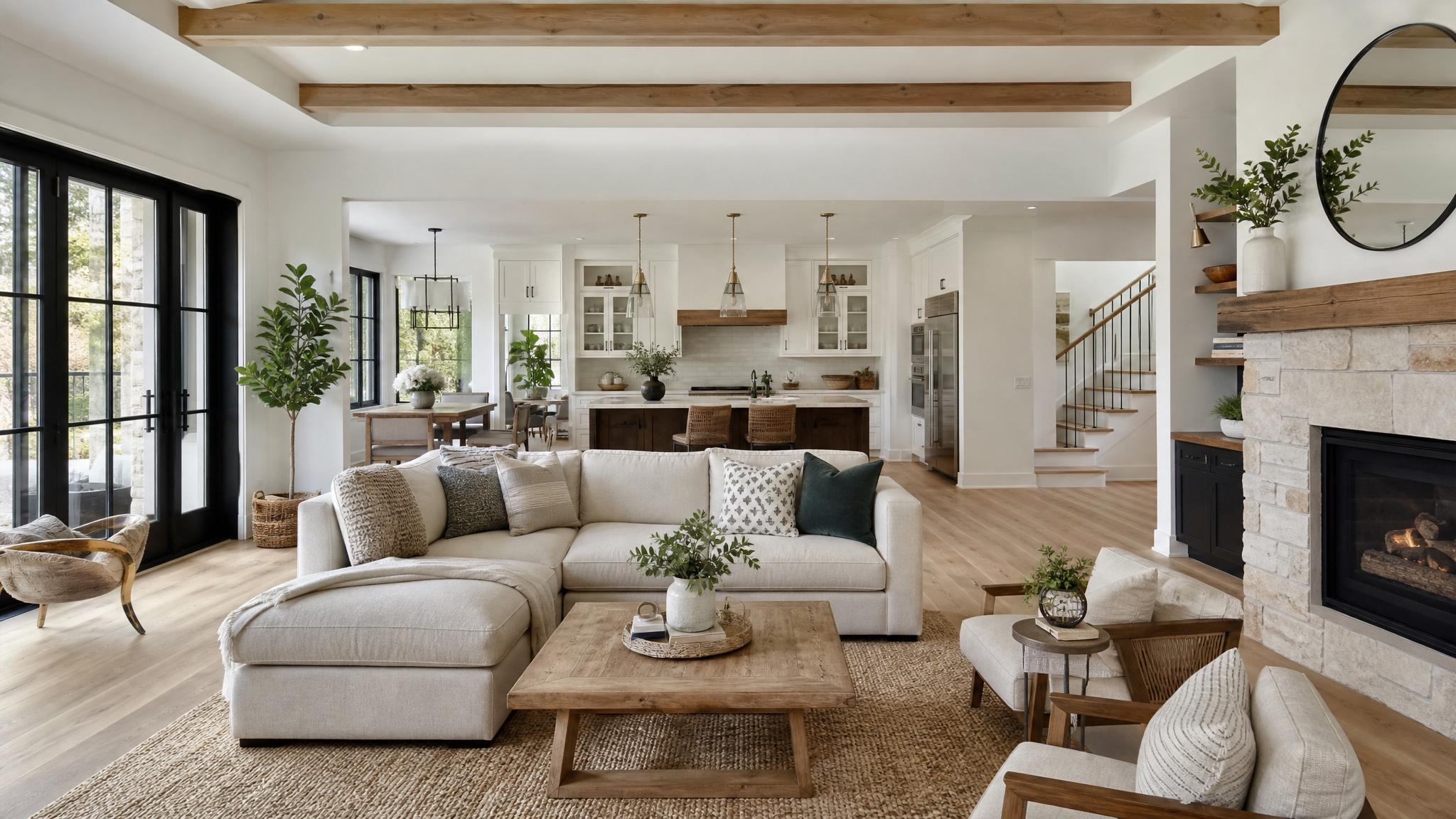
Why Transitional Design Works
The transitional style is known for its balance, employing clean lines, soft fabrics, and a cohesive color palette. This design aesthetic allows for flexibility and longevity while appealing to a wide range of tastes.
- Aligns with various styles—traditional, modern, and everything in between.
- Creates a warm atmosphere suitable for relaxation and socializing.
- Utilizes neutral colors complemented by bold accents for a chic yet comforting look.
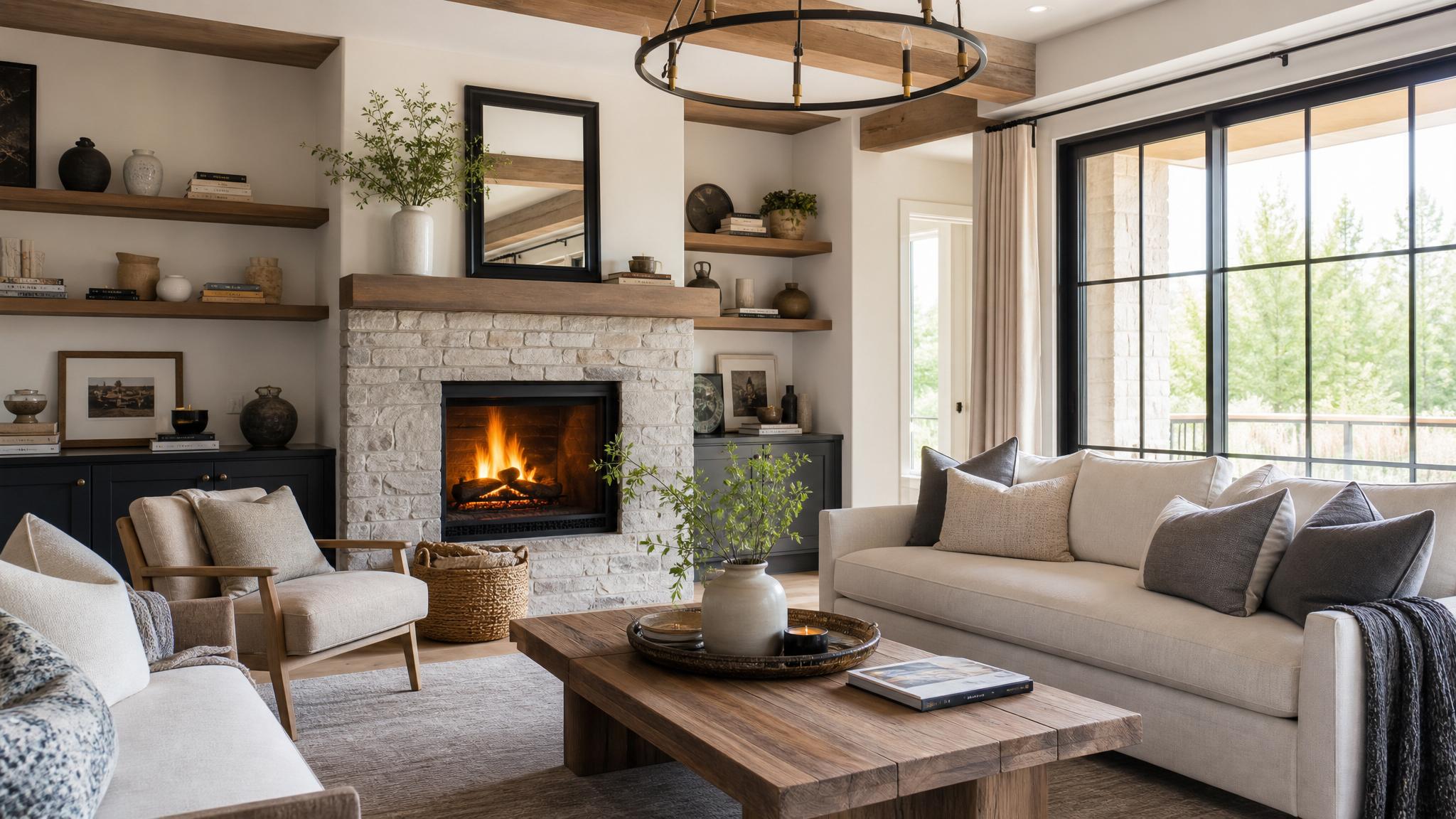
30 Inspirational Transitional Living Room Designs
Here’s a curated list of 30 transitional open-plan living room inspirations that photograph exceptionally well:
- Subtle beige tones paired with dark wood furniture.
- Open shelving integrated with elegant decorations.
- Large windows that accentuate natural lighting.
- Soft pastel shades complemented by vibrant throw pillows.
- A statement chandelier above an elongated dining table.
- Layered textures from rugs, curtains, and cushions.
- Modern art pieces balanced with rustic elements.
- Glass coffee tables paired with cozy sofas.
- Custom-built cabinetry that blends in with the overall design.
- A mix of contemporary lighting fixtures with vintage accent pieces.
- Indoor plants enhancing air quality and ambiance.
- Floor-to-ceiling bookshelves for a sophisticated touch.
- A sprawling sectional that invites conversation.
- Natural wood beams juxtaposed with sleek wall finishes.
- An accent wall with featured wallpaper or paint.
- Open kitchen spaces with a seamless look into the living area.
- Comfortable textiles that encourage lounging.
- Neutral bases boosted by splashes of color through accessories.
- Creative use of mirrors to amplify visual space.
- Layered lighting options providing versatility.
- Area rugs that define conversation zones.
- Incorporating family photos to add a personal touch.
- Heightened ceilings creating an airy atmosphere.
- Stylish bar carts that invite social gatherings.
- Child-friendly designs that don't compromise on elegance.
- Artful layouts that maintain a sense of open space.
- Warm lanterns or candles for an intimate ambiance.
- Custom textiles, like drapery and upholstery, for a polished look.
- Cohesive furniture arrangement fostering flow and accessibility.
- Bold prints and patterns that bring character without overwhelming.
- A multimedia area that caters to both entertainment and decor.
- Seating that incorporates storage solutions for tidiness.
Common Mistakes to Avoid in Transitional Design
When designing your open-plan living room, watch out for these common pitfalls:
- Choosing overly bold colors that don't harmonize with the overall design.
- Neglecting the balance of furniture sizes, leading to a cluttered look.
- Overstuffing the space with unnecessary decor items.
- Ignoring the importance of proper lighting varieties.
- Failing to create conversation areas that are inviting.
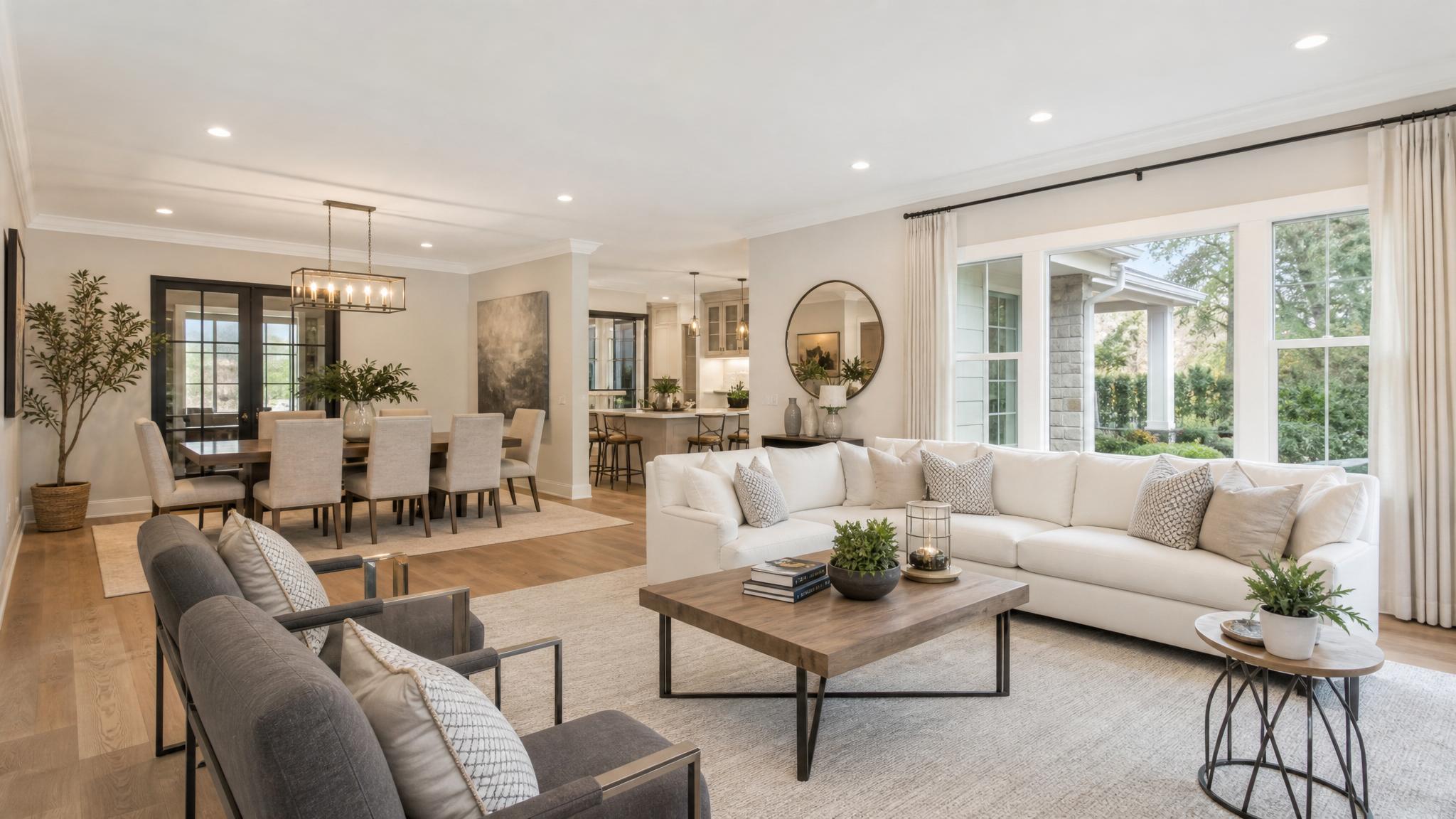
Key takeaway
Embrace the versatility of transitional design; it’s the perfect blend that caters to both modern lifestyles and timeless elegance, making your space photogenic and functional.
Final Thoughts
A well-designed transitional open-plan living room can elevate your property’s appeal in the real estate market. Not only do these spaces photograph beautifully, but they also ensure comfort and functionality for everyday living.