Understanding the Open-Plan Concept
Try Palette Immo AI Interior Styler
Transform empty rooms and listing photos with AI virtual staging and interior design. Get started in minutes.
Get startedOpen-plan living has become increasingly popular in contemporary home design. It offers a seamless flow between spaces, making areas feel larger and more inviting. However, designing an open-plan layout can be challenging, especially when it comes to creating functional zones that cater to different activities. Here, we explore three buyer-friendly room layouts that emphasize both style and practicality.
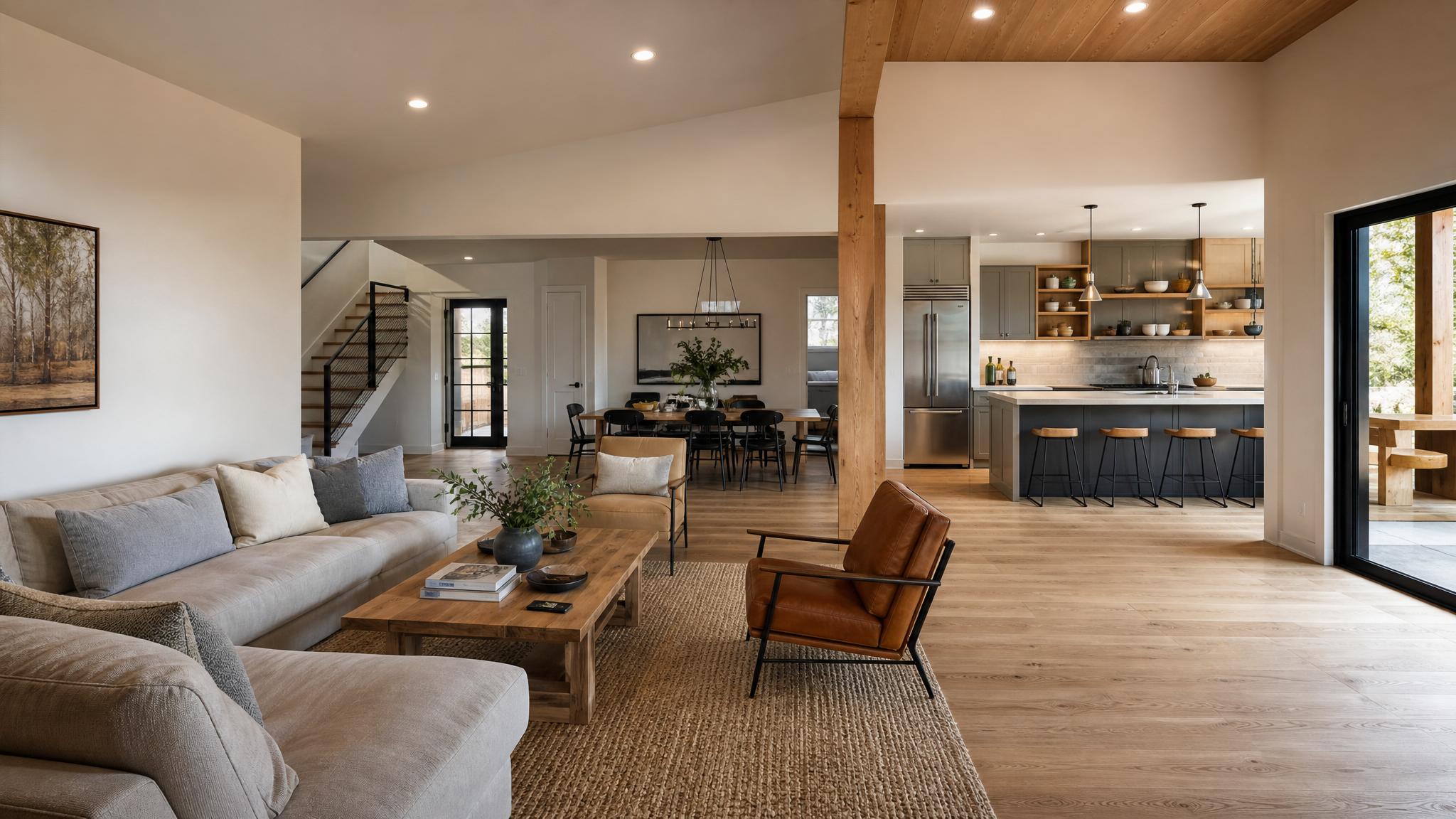
1. The Social Hub Layout
The social hub layout is perfect for families or social butterflies who love to entertain. This design focuses on creating an inviting atmosphere by clustering seating around a central coffee table, encouraging conversation and interaction. Here are some tips for achieving this layout:
- Use a sectional sofa to define the seating area.
- Incorporate accent chairs that complement the sofa while adding more seating options.
- Position side tables for drinks and snacks within easy reach.
- Incorporate rugs to visually separate the seating area from dining or kitchen zones.
2. The Multi-Functional Zone
For those who value versatility, a multi-functional zone layout works wonders. This design incorporates various functionalities in one open space, catering to dining, relaxation, and even work-from-home needs. To effectively create this layout, consider the following:
- Designate specific areas for each function, such as a small dining table near the kitchen and a workspace adjacent to the living area.
- Opt for furniture that can serve dual purposes, like an ottoman that doubles as a coffee table and storage.
- Utilize partitions, such as bookshelves or plant dividers, to subtly separate distinct zones while maintaining an overall flow.
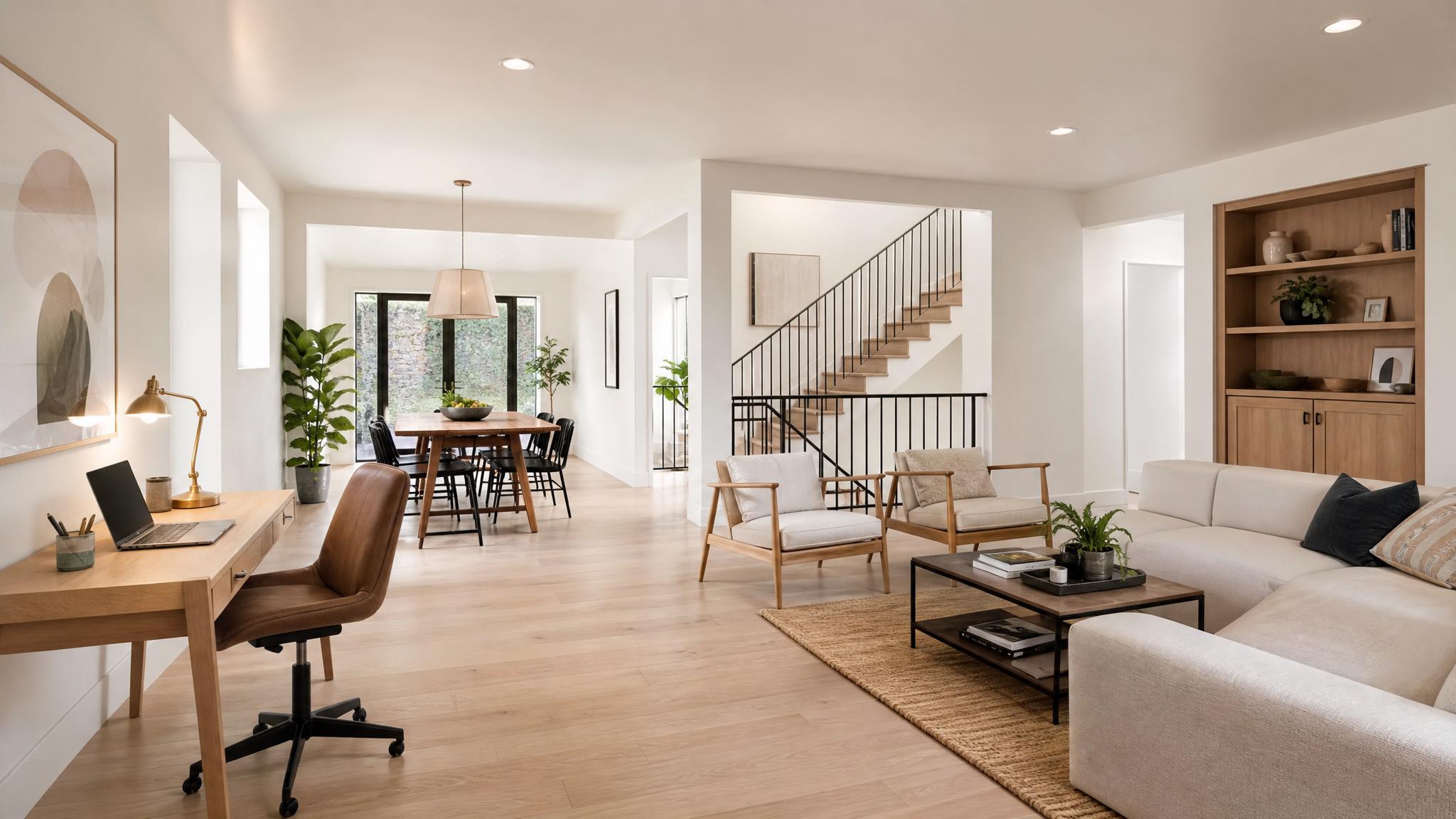
3. The Minimalist Retreat
If simplicity and tranquility are your goals, the minimalist retreat layout offers a serene space that prioritizes clean lines and fewer distractions. This layout is visually appealing and tends to create a calm atmosphere. Here's how to achieve a minimalist retreat:
- Select a neutral color palette to create a sense of unity across the space.
- Incorporate streamlined furniture with simple designs, avoiding overly ornate pieces.
- Minimize clutter by using built-in storage solutions or multi-functional furniture.
- Introduce natural elements like plants or textured materials to add warmth without overwhelming the eyes.
Choosing Your Ideal Layout
When selecting a layout for your open-plan living room, consider your lifestyle and the specific needs of your household. Factors like the number of occupants, how you entertain, and your personal style are crucial to ensure you create a space you'll love.
Key takeaway
Designing an open-plan living room requires intentionality. Choose a layout that complements your lifestyle, whether it's a social hub, a multi-functional space, or a serene retreat.
Conclusion
Open-plan living rooms provide endless possibilities for creativity and functionality. By incorporating one of these three buyer-friendly layouts, you can create a harmonious space that enhances both the aesthetic and practical aspects of your home. Remember, the best layout is one that reflects your lifestyle and preferences, making your home not just a place to live, but a haven to thrive.